Hu. Bahirji Smarak Vidyalaya Education Society, Wapti's

Bahirji Smarak Mahavidyalaya


Basmathnagar, Dist. Hingoli - 431 512 (MS)


Affiliated to Swami Ramanand Teerth Marathwada University, Nanded

✅ Recognized by UGC 2(f) and 12(B) Status  

|| 🏆 NAAC Reaccredited with 'A' Grade (CGPA 3.02)


Bahirji Smarak Mahavidyalay

1. Brief History

The Department of History has been part of the college since its establishment in 1971. Initially, Mr. Shri Sudhakarrao Mule was appointed as the Head of the Department, and a few months later, Mr. Shri. Dinanath Marotrao Chavan joined as a full-time faculty member. Mr. Sudhakarrao Mule retired, after which Mr. Dinanath Marotrao Chavan took over as the Head of the Department. Both contributed significantly to the growth and development of the department.

Dr. Rambhau Rajaram Mutkule joined the department as a permanent faculty member on ____________. Since then, the department has had three permanent faculty members. Mr. ____________ retired on ____________, and Dr. ____________ assumed the role of Head of the Department from ____________. He has continued to lead the department to the present day. In ____________, Dr. Uddhav Umaji Raut also joined as a permanent faculty member.

Over the past several years, the department has successfully implemented two best practices: a Heritage Awareness Programme designed to foster cultural values among students, and a Voter Awareness Programme to encourage greater participation in democratic processes. Both faculty members have served as NSS Programme Officers, and they actively engage in research work.

Many alumni of the department have gone on to build notable careers as politicians, government officials, educators, and entrepreneurs.

The department encourages students to take part in cultural competitions and competitive examinations. Several female students have earned cash prizes on various occasions.

In the past two years, the department has successfully operated a competitive examination and guidance cell, which now attracts over a hundred students to attend regular sessions.

1. Features of the Department

  • The department has two permanent faculty members.
  • Dr. Rambhau Rajaram Mutkule & Dr. Uddhav Umaji Raut serves as a research supervisor.
  • Faculty members remain actively involved in research activities.
  • The department successfully runs a competitive examination and guidance cell i.e., Modi Script, etc.
  • Students participate in the Avishkar Research Festival, with faculty providing guidance for research projects.

2. Strength of the Department

  • Sufficient student enrollment.
  • Consistently good academic results in undergraduate classes.
  • A strong collection of history books and journals in the library.
  • Qualified and dedicated faculty.
  • Active collaboration with government departments through outreach and extension activities.

3. Future Plan

  • To organize History or Multilingual seminars, conferences, and workshops.
  • To introduce a postgraduate (PG) programme.

Name of the Program Papers Taught POs, PSOs, and Cos,
B. A. (pdf link of all papers) Link the pdf doc of POs, PSOs, and Cos.

Note: Use the following templates to write the POs, PSOs, and Cos. and convert it into pdf.
Programme Outcomes
At the end of the programme, student will be able to
1 Students will be able to develop their sense of social responsibility.
2 Students will be able to acquire the knowledge and skills of social research.
3 Students will gain proficiency in written and oral communication in academic and social context.
4 Students will be able to understand the importance of democratic values such as social justice, fraternity, equality, liberty, secularism etc.
5 Students will be able to integrate knowledge from various disciplines to understand complex social issues.
6 Students will be prepared for careers in education, civil services, media, social work, NGO, and other related fields.

History Department – Programme Outcomes (POs)
At the end of the programme, student will be able to:

1. Develop a deeper sense of social and civic responsibility through the study of history.
2. Acquire analytical skills and historical research methodologies to critically examine the past.
3. Gain proficiency in written and oral communication within academic, social, and professional contexts.
4. Understand and appreciate democratic values such as social justice, fraternity, equality, liberty, and secularism through historical perspectives.
5. Integrate knowledge from various disciplines to better comprehend complex historical and contemporary issues.
6. Be well-prepared for diverse careers in education, civil services, journalism, museums, archives, cultural heritage management, and related fields.

History Department – Programme Specific Outcomes (PSOs)
At the end of the programme, student will be able to:

1. Understand historical processes, events, and issues by applying historical concepts, theories, and approaches developed by prominent historians.
2. Develop the ability to design and conduct historical research using primary and secondary sources, as well as qualitative and quantitative methods.
3. Understand the nature, evolution, and impact of institutions, ideas, and movements on societies over time.
4. Enhance their communication skills to effectively present historical arguments, interpretations, and research findings in both oral and written formats.
5. Demonstrate ethical awareness and cultural sensitivity when analyzing historical events and their influence on diverse societies.
6. Be equipped for careers in historical research, teaching, heritage and museum management, public administration, journalism, civil services, and other related fields.


Course Outcomes
Subject: HISTORY
BA: SEMESTER– I, II
Class & Paper Course code & course title At the end of the course, student will be able to
BA I
Sem I
HHISCT 1101
History of Ancient India (up to 322BC)
1. Source
2. Indus Valley
3. Vedic Age
4. Jainism and Buddhism in India
BA I
Sem I
HHISCT 1102
History of Maratha Power (1630-1673)
1. Sources for the study of Maratha History
2. Causes of the Rise of Maratha Power
3. Chhatrapati Shivaji’s relation with Adilshahi
4. Chhatrapati Shivaji’s relation with Mughal
BA I
Sem II
HHISCT 1151
History of Ancient India (322BC to 647AD)-I
1. Maurya Empire
2. Satvahana Dynasty
3. Gupta Dynasty
4. Vakataka and Vardhana Dynasty
BA I
Sem II
HHISGE 1152
History of Maratha Power (1674-1707)
1. Coronation of Chhatrapati Shivaji Maharaj
2. Karnataka Expedition
3. Chhatrapati Sambhaji Maharaj
4. Maratha War of Independence
BA I
Sem I GE
HHISGE 1101
Social Reformers in Maharashtra
1. Social Reform Movement in Maharashtra
2. Gopal Hari Deshmukh (Lokhitwadi)
3. Mahatma Jyotirao Phule
4. Gopal Ganesh Agarkar
BA I
Sem II GE
HHISGE 1151
Social Reformers in Maharashtra
1. Rajarshi Shahu Maharaj
2. Dr. Babasaheb Ambedkar
3. Maharshi Vitthalrao Ramji Shinde
4. Dr. Punjabrao Deshmukh
Sr No Photo Name of Faculty Designation Qualification Teaching Experience Biodata Link
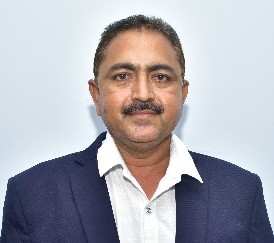
1 Dr. RAMBHAU RAJARAM MUTKULE Dr. RAMBHAU RAJARAM MUTKULE Professor M.A., M.Phil., Ph.D. 29 Years View Biodata
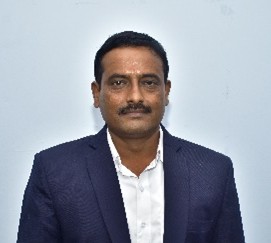
2 Dr. Uddhav Umaji Raut Dr. Uddhav Umaji Raut Assistant Professor M.A., Ph.D. 06 Years View Biodata

Research Contributions

Research Center Details (if applicable)

A. Year Of Introduction

B.Highlight of the center

C. Area of research

D. Research Guide

E.Collaboration


4.1 Research Guide:

SR.NO Name of the Guide Year of Recognition
1 Dr. RAMBHAU RAJARAM MUTKULE 2010


4.2 Ph.D. Scholars Registered:

NAME OF THE GUIDE : Dr. RAMBHAU RAJARAM MUTKULE
Sr. Name of Candidate(s) Registration Submitted Awarded
1. Shilwant Bapu Limba
‘Mahatma Phule Yanche Shudratishdra Vishayak Vichar Ek Abhyas’ SRTMU, Nanded (PG/Ph.D./2011-12/4352 Date: 29/5/2012)
---- Awarded on May 2012
2. Sainath Narayan Shetod
‘Dr. A. R. Kulkarni yanche Marathyanchya Itihaasa Sandhrbhat Likhan Ek Abhyas, SRTMU, Nanded’
---- Awarded on August 2015
3. Dhondge Parikshit
SRTMU Parisaratil Shetkari Sanghtnechya Karyacha Aitihasik Abhyas
---- Awarded on Nov. 2016
4. Someanshi G. N.
‘Marathi Vangmayatun Nirman Jhaleli Chhatrapati Sambhaji Rajanchi Anaitihasik Pratima: Ek Abyas’
---- Awarded on May 2017
5. Sonwane J. C.
‘Education and Social Change in Maharashtra with Special Reference to Women and Dalit’
---- Awarded on Sept. 2017
6. Shinde Dnyaneshwar Kacharu
‘Marathyanchya Itihasachya Sandhrbhat V.C.Bebdre yanche Likhan – Ek Abhyas’
---- Awarded on 18th Dec. 2017
7. Pawade Khobraji Wamanrao
‘Maratha Sattechya Parabhavachi Karan-mimansa sambandhi V.V. Shastri Khare & T.S. Shejwalkaranche Likhan: Ek Aitihasik Abhyas’
---- Awarded on 23rd Oct. 2019
8. Randive Dinkar Mohanrao
Bhartiya Itihas Lekhnat Dr. R.S. Morvanchikar Yanche Yogdan; Ek Abhyas
---- Awarded on 30th Nov. 2021
9. Shekle Paravin Sudam
‘Maharashtrachya Prabodhan Chalwalit Mahila Samaj Sudharkanche Yogdaan: Ek Aitihasik Adhava’
30/10/2013 Awarded on 6th Oct. 2021
10. Wavhal Navnath Kashinath
‘Ahemadnagar Shahratil Parytan Sthale: Ek Aitihasik Abhyas’
13/07/2019 Awarded on 15th Nov. 2022
11. Naik Nivruti Uttamrao
‘Govindroa Rathod Yanche Jivan Va Karya Aitihasik Abyas’
Awarded on 27th March 2023
12. Hode Gajanan Ganpat
‘Bhartiya Swatantrya Ladhyamadhye Nasik Zilyatil Aadiwasi Krantikarkanchya Yogdanacha Aitihasik Abhyas (1818 to 1947 AD)’
13/07/2019 Awarded on 9th Aug. 2023
13. Sisodiya Pradeep Bansidhar
‘Itihaskar Jaysingrao Pawar Yanche Samagra Itihaslekhan: Ek Chikitsak Abyas’
13/07/2021 Submitted Aug. 2024 Awarded on 31st Jan. 2025
14. Mirashe Kisan Vitthalrao
‘Marathi Sahityatun Pratit Honara Shivkalacha Itihas: Ek Chikitsak Abyas (1630-1707)’
13/07/2021 Submitted Aug. 2024 Awarded on 31st Jan. 2025
15. Mule Shrikrusha Sukhdev
‘Shivkalin Gad-durgawaril Jal Vyavsthapan : Pune, Satara, Kolhapur, Raigad Zilyatil Pramukh Killyanvaril Jal Vyavsthapanacha Aitihasik Abyas’
26/11/2019

4.3 Research Projects:


4.4 Research Papers Published :

SR.NO Name of the Faculty No. of Research Papers View Details (Link)
1 Dr. Rambhau Rajaram Mutkule 65+ View (All pdf)
2 Dr. U.U. Raut 11+ View (All pdf)


4.5 Book /Chapter in Book Published:

Name of the Faculty: Dr. RAMBHAU RAJARAM MUTKULE (13 Books)
Sr. Title of Book(s) Publication Type ISSN/ISBN No. Sole/ Co-Author Publisher (City/Country) & Year of Publication View Details (Link)
1 Swatantrya Sainik Krhale – Vyaktitv aani Krutitva National Publisher ISBN 978-81-909762-2-0 Sole Author Balivansh Prakshan, Nanded, 2010
2 Marathyancha Itihass (Shivkal te Peshvai) National Publisher ISBN 81-93-81948-88-0 Co-Author Chinmay Prakashan, Aurangabad
November 2013
3 Mahatma Phule krut Marathyancha Itihaas National Publisher ISBN 81-9924716-6-2 Sole Author Panchfula Prakashan, Aurangabad
January 2014
4 Madyayugin Bhartacha Itihaas (1526-1761) National Publisher ISBN 81-978-93-84593-16-2 Editor and Sole Author Chinmay Prakashan, Aurangabad
15 August 2014
5 Lokhitwadiche Itihaas Lekhan (Vishesh Sandharbh Peshvai) National Publisher ISBN 978-93-84593-48-3 Sole Author Chinmay Prakashan, Aurangabad
November 2014
6 Nyaymurti Randenche Itihaas Lekhan (Vishesh Sandharbh Maratha Kalkhand) National Publisher ISBN 978-93-84593-47-6 Sole Author Chinmay Prakashan, Aurangabad
November 2014
7 Maharashtrache Shilpkar National Publisher ISBN 978-93-84593-49-0 Sole Author Chinmay Prakashan, Aurangabad
December 2014
8 Swatantryottar Bhartacha Itihas National Publisher ISBN 93-84451-64-6 Co-Author Kailash Publication, Aurangabad
November 2016
9 Aadhunik Maharashtratil Samaj Sudharak National Publisher Co-Author Chinmay Prakashan, Aurangabad
2018
10 Sahityatil Sambhaji Raje Aani Vastav Itihas National Publisher ISBN 978-93-5311-782-5 Principle Author Panchfula Prakashan, Aurangabad
December 2018
11 Ch. Shivaji Aani Shiv Kal National Publisher Co-Author Aruna Prakashan, Latur
First Edition 2020
12 Bhartacha Itihas (1526-1856) 102 Pages National Publisher ISBN: 978-81-949570-7-2 Principle Author Aruna Prakashan, Latur
First Edition 2022
13 Maharashtratil Samajsudharak Aani Prabodhan Chalwal National Publisher ISBN: 978-81-91689-43-8 Principle Author Aruna Prakashan, Latur
First Edition 2022

Name of the Faculty: Dr. RAMBHAU RAJARAM MUTKULE (13 Books)
Sr. Title of Book(s) Publication Type ISSN/ISBN No. Sole/ Co-Author Publisher (City/Country) & Year of Publication View Details (Link)
1 Bharatachya Jadan Ghadnitil 75 Varshe… National Publisher Sole Author
2 Hyderabad Freedom Struggle Movement National Publisher Co-Author Aruna Prakashan, Latur ISBN 978-93-91689-45-2


4.5 Patents / Copay rights Published / Field :

SR.NO Name of the Faculty Tittle of Patent / Copyrights Date of Filing Year of Certificate Award View Details (Link)
1 Nil Nil Nil Nil Link

4.6 Seminar / Conferences / Workshop / Webinar Organized:

SR. No. Name of the event State / National Duration View Details (Link)
1 Marathwada Itihas Parishad (19–20 Jan. 2013) National Level Two day Link
2 Mahtma Phule Itihas Academy (26 Nov. 2017) National Level One Day Link
3 One Day Link

4.7 Workshop on IPR and Research Methodology:

SR. No. Title of the Conference State / National / International Duration No. of Participants
1 Use of ICT in Social Research, 18/10/2021 College Level One Day 15

Academic Year: 2021-22
1. Tittle:

Certificate Course in Modi Script
2. Course Outcomes:

• MODI was one of the most important scripts of medieval Maharashtra.
• All historical documents of Ch. Shivaji Maharaj and Peshwas are written in MODI.
• MODI is like a short hand.
• Earlier, in Maharashtra, documents regarding Land Revenue, Judiciary, Justice, Donation of Land (Dan-Patra), Religious matters, Property matters (e.g. matters between brothers), Jahagir vatan, Military orders (Farmane) etc. were written in MODI. Research of these medieval documents is not possible without having proper knowledge of MODI script.
• All these documents are kept at archrivals like Peshwas Dafftar, Deccan College and Bharat Itihas Sanshodhan Mandal in Pune. But MODI readers are not available easily nowadays.
• One of the specialties of MODI is you can write words together without lifting your hand with which you are writing.
3. Syllabus:

Unit I: Modi Script Introduction
1. Modi Script - Writing & Reading
i) Vowels
ii) Consonant
iii) Numbers

Unit II: Kalaganana
1) Hindu
2) Muslim
3) Anewari Reghi Hisheb

Unit III: Reading Practice
1) Short Forms
2) Farasi words

Unit IV: Archives & Types of Documents, Research Opportunity
4. Report:

Summary

Department of History for the year 2022. In this course 56 students were admitted. Satara was the Capital of Maratha Empire right from the rule of the great king Chh. Shivaji Maharaj, The official script at his regime was Modi. Modi was used as an official script during the Medieval Period and during the British rule and even after independence up to 1960. So all sorts of documents including birth and death certificates, land & revenue records, property and legal documents correspondence and other historical documents were in Modi Script. In order to understand, read and interpret the documents, the knowledge of Modi is necessary Many lawyers, engineers, researchers, teachers, heirs of property are facing the need of the knowledge of Modi Script for various purposes. Taking into consideration the above needs, our institute has designed the course. Course was successfully conducted 90% lectures were conducted as per the time table. The examination was conducted where 56 students were present. The certificate were distributed to the students.

Academic Year: 2022-23
1. Tittle:

Certificate Course in Relevance of Gandhian Thoughts in Current Era
2. Course Outcomes:

•Gandhian programme is holistic and multidimensional.
•The objective of his constructive work is the creation of non-violent society.
•Gandhi envisages a healthy society based on harmony and dialogue, where the ideas of equality and justice are translated in the lives of teeming millions.
3. Syllabus:

Part-I

I.Gandhi: Biographical sketch
II.Gandhi in south Africa
III.Gandhi's Idea of Non violence


Part-II

I.Gandhi's Eighteenth point Constructive Program
II.Gandhi's critic on modernity
III.Gandhi as politician


Part-III

I.Gandhi's critic on colonialism
II.Gandhi and Women Empowerment
III.Gandhi's idea of social justice & relevance in current Era


4. Report:

Department of History for the year 2022-22. In this course 63 students were admitted. Certificate Course in Relevance of Gandhian Thought in Current Era aims Certificate course in Social Work Program. The program mainly centered on research in separate aspects of Gandhi's life, work and thought. The program covers various specialized subject Gandhi's life and Central Philosophy, Political Thought of Gandhi, Economic Thought of Gandhi, Social Thought of Gandhi and Social Work and Peace Studies. The program is perfect for those candidates who interested in Gandhian Studies and its related areas such as social welfare, work, etc. After successful completion in this course degree holder can become social activist and contribute for the up-gradation of poor section of the society and to Praise questions relating to their concerns. Course was successfully conducted 90% lectures were conducted as per the time table. The examination was conducted where 63 students were present. The certificate were distributed to the students.


Academic Year: 2024-25
1. Tittle:
2. Course Outcomes:
3. Syllabus:

4. Report:

Linkage and collaborations / MoUs
Sr no Photo The Organization that signed the Mous Year of Collaboration Duration Aims of Collaboration Activities organized under MoUs
1
2

B.A. III

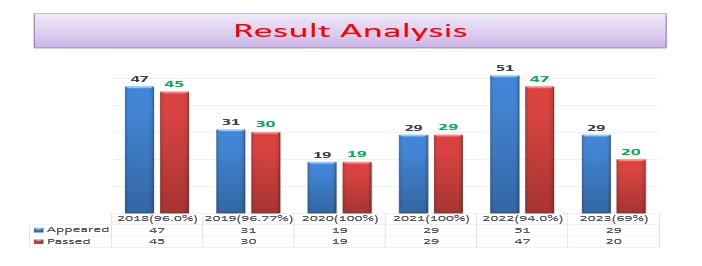
Result Analysis

Toppers (Last 5 Year)

Academic No. of Students Students Name % Percentage
2019-20 1 नॅक कोऑर्डिनेटर साहेब
2 नॅक 2023 ला पूर्ण दिलेले आहे
3 कॉपी पेस्ट करून घेणे
4
5
6
2020-21 1
2
3
2021-22 1
2
3
4
2022-23 1
2
3
4
5
6
7
2023-24 1
2
3
4
5
6
7
8
9
10
11
Dr. Rambhau Rajaram Mutkule
Class Semester Subject Link
BAFY Sem-I & II History U-Tube-Link
BASY Sem-III & IV History U-Tube-Link
BATY Sem-V & Sem VI History U-Tube-Link
Name of the Teacher: Dr. Udhav Umaji Raut
BAFY Sem-I & II History U-Tube-Link
BASY Sem-III & IV History U-Tube-Link
BATY Sem-V & Sem VI History U-Tube-Link

Title:

1. Organizing Relevance of Gandhian Thoughts in Current Era.

Objectives:
• To explore and articulate how Gandhian principles—such as truth (satya), non-violence (ahimsa), self-reliance (swadeshi), simplicity, and trusteeship—retain practical and ethical relevance in today’s complex globalized society.
• To analyze the application of these thoughts in addressing modern challenges like social inequality, violence, environmental degradation, and ethical crises.
• To inspire critical reflection and dialogue on adapting Gandhian philosophy creatively for contemporary personal, social, and institutional life.

The Context:
• The current era is marked by rapid technological
advances, consumerism, political polarization, rising violence, and a climate emergency.
• Globalization has connected economies but widened socio-economic disparities.
• Misinformation, hate speech, and declining public trust highlight the need for truth and transparency.
• The environmental crisis calls for a shift from consumerist lifestyles to sustainable living, aligning with Gandhi’s ideas of simplicity and harmony with nature.
• Increasing mental stress and alienation point toward the relevance of self-discipline, mindfulness, and ethical living rooted in Gandhian thought.

Evidence of Success:
• Non-violent resistance and civil disobedience movements worldwide, such as those led by Martin Luther King Jr., Nelson Mandela, and more recently, peaceful climate marches and citizenship protests, have drawn inspiration from Gandhian methods.
• The resurgence of interest in local economies and handicrafts reflects Gandhian ideas of swadeshi and economic self-reliance.
• Environmental initiatives promoting minimalism and sustainable living resonate with Gandhian simplicity.
• Corporate Social Responsibility (CSR) and social entrepreneurship mirror Gandhi’s trusteeship principle, encouraging ethical wealth distribution and community welfare.
• Educational programs and community organizations are increasingly integrating peace education, volunteerism, and ethical leadership, influenced by Gandhian constructive work ideology.

2. Modi Script.

Objectives:
• To introduce students and the academic community to the Modi script, its origin, evolution, and historical importance in the administrative and cultural history of Maharashtra.
• To develop skills in reading and interpreting historical documents written in Modi script.
• To encourage appreciation and preservation of regional scripts as vital components of India’s documentary heritage.

The Context:
• Modi script emerged around the 17th century and was widely used for administrative purposes in the Maratha Empire, especially during the reign of the Peshwas.
• It served as the primary script for writing Marathi until the early 20th century, before being gradually replaced by the Devanagari script in official use.
• Many valuable historical documents, including revenue records, correspondence, and legal documents from the Maratha period and British colonial era, are preserved in Modi script.
• In the era of digitization and heritage conservation, knowledge of Modi script helps historians, archivists and students’ access, study, and preserve primary historical sources.

Evidence of Success:
• Increased student engagement through workshops and hands-on reading sessions of Modi manuscripts.
• Successful transcription and preliminary study of selected historical documents from archives, making them accessible for further research.
• Positive feedback and participation from students, scholars, and heritage enthusiasts, leading to plans for advanced workshops.
• Enhanced awareness of local script heritage, encouraging interdisciplinary interest from linguistics, history, and cultural studies.
• Collaboration opportunities with local archives, museums, and heritage centers for preservation and digitization projects.

Photos (with Geotag)
Result Analysis
Result Analysis
Sr no Nature of Activity Organizing Agency / Collaboration Agency No. Of Student Participates Duration Link
1 Voters’ Awareness Programme Tahasil office Basmath 40 14 March 2022 Link
2 Inclusion of the name in voters list of eligible people Tahasil office Basmath. 50 06 to 13 Dec. 2022 Link
3 Participate in Nashamukt Abhiyan Maharashtra State Department of Social Justice and Special Assistance. 74 09 September 2023 Link
Sr no Name of the Alumni Year of Passing Progress
1
2
3
4
5
6
7
8
9
10
11
12
13
Sr no Name of the Event YouTube Link / Webinar Link
1 Link
2 Link
3 Link