Hu. Bahirji Smarak Vidyalaya Education Society, Wapti's

Bahirji Smarak Mahavidyalaya


Basmathnagar, Dist. Hingoli - 431 512 (MS)


Affiliated to Swami Ramanand Teerth Marathwada University, Nanded

✅ Recognized by UGC 2(f) and 12(B) Status  

|| 🏆 NAAC Reaccredited with 'A' Grade (CGPA 3.02)


Bahirji Smarak Mahavidyalay

1. Brief History

The Department of Sociology has existed since the establishment of the college in 1971. At the beginning Shri Sudhakarrao Mule was appointed as the Head of the department and after few months Shri. Dinanath Marotrao Chavan joined as a full-time teacher. Shri Sudhakarrao Mule passed away in 2005 before the retirement and consequently Shri Dinanath Marotrao Chavan became the Head of the Department. Both of them made great contributions to develop the department.

Dr. R. G. Kumawat joined the department as permanent faculty member on 11 March 2000. Since then, three faculty members were working as permanent faculty. Shri Dinanath Marotrao Chavan retired naturally on 30.09.2007, and subsequently Dr. R.G. Kumawat became the Head of the Department on 1st of October 2007. Since then, he has continued serving the department as HOD till today. In February 2011 Dr. Swati Patil joined the department as permanent faculty.

Over the last 13 years, department has been organizing two Best Practices. One is Gandhi Vichar Sanskar Pariksha in order to instill the moral values in the students and another is Voters Awareness Programme to increase the participation in democratic festivals. Both faculties have played the role as NSS Programme Officer. Faculty members of the department continue to engage in research activities.

Lots of Alumni of the department are playing the role in the society as politician government servant, teacher, and entrepreneur.

Over the last two years department successfully running the competitive examinations and guidance cell. More than hundred students are attending regular classes.

1. Features of the Department

  • Department have two permanent faculty.
  • Dr. Swati Patil is research supervisor.
  • Faculties are continuing engage in research activities.
  • Department successfully running competitive examination and guidance cell.
  • Students participate in the Avishkar Research Festivals. Faculties provide necessary guidance to them for making research projects.

2. Strength

  • Enough no. of students.
  • Good result of the UG classes.
  • Good collection of sociology books and journals in the library
  • Qualified faculty.
  • Conduct outreach and extension activities in association with governmental departments.

3. Future Plan

  • To organize seminar, conference, workshop.
  • To commence PG programme.
Name of the Program Papers Taught POs, PSOs, and Cos,
B. A. F. Y. View Link
B. A. S. Y. View
B. A. T. Y. View
Sr No Photo Name of Faculty Designation Qualification Teaching Experience Biodata Link
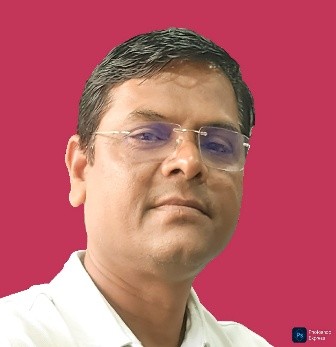
1 Dr. R. G. Kumawat Dr. R. G. Kumawat Associate Professor M.A., B. Ed., NET, M.Phil., Ph.D. 25 Years View Biodata
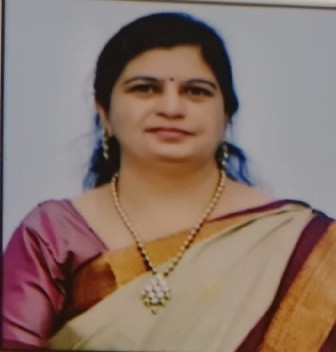
2 Dr. S. V. Patil Dr. S. V. Patil Associate Professor M.A., Ph.D. 14 Years View Biodata

Research Contributions

Research Center Details (if applicable)

A. Year Of Introduction : Not Applicable

B. Highlight of the center : Not Applicable

C. Area of research : Not Applicable

D. Research Guide : Not Applicable

E. Collaboration : Not Applicable


4.1 Research Guide:

SR.NO Name of the Guide Year of Recognition
1 Dr. S. V. Patil 2013


4.2 Ph.D. Scholars Registered:

SR.NO Name of the Guide Name of the Scholars Title of Research Degree Awarded
1 Dr. S. V. Patil Kawle Umrao Vithalrao हिंगोली जिल्ह्यातील सालदाराच्या सामाजिक जीवनाचा समाजशास्त्रीय अभ्यास 14/10/2017
2 Dr. S. V. Patil Mundhe Ramkishan Haridas बीड जिल्ह्यातील महिलांच्या अंधश्रद्धा विषयक दृष्टिकोनाचा समावेश शास्त्री अभ्यास 22/12/2018
3 Dr. S. V. Patil Rautkhedkar Mahanada Shriram महात्मा ज्योतिबा फुले यांच्या सामाजिक विचारातील स्त्रीवाद :एक समाजशास्त्रीय अभ्यास 11/01/2020
4 Dr. S. V. Patil Jadhav Satyabhama vilas नांदेड जिल्ह्यातील बालकामगारांच्या समस्यांचा अभ्यास 18/01/2018


4.3 Research Contributions:

SR.NO Name of the Faculty No. of Research Papers Book /Chapter in Book Published:
1 Dr. R. G. Kumawat 22 09
2 Dr. Swati Patil 30 01


4.4 Seminar / Conferences / Workshop / Webinar Organized:

SR.NO Name of the event Sate / National Duration View Details (Link)
1 Workshop on Helping Hand of LIC in empowerment of Indian Women’ 08/09/2017 College One Day Link
2 Seminar on “Rajarshi Shahu Maharajanchya Vicharanchi Prasangita” (The Relevance of the thought of Rajarshi Maharaj) 17/05/2022 University One Day Link
3 Seminar on “Career Opportunities”, 244/01/2023 College One Day Link


Academic Year: 2021-22
1. Tittle:

Certificate course in NGO Management and Administration
2. Course Outcomes:

1.The student will understand the significant principles, methods and techniques of NGO administration governors with full insight of the practices involved in the process.
2. Student will acquire practical skills in a developing effective strategy pertaining to all the happiest of NGO functioning.
3. The student will be able to understand the significance of effective communication and correspondence leadership development and human resource management in the contact of NGO.
3. Syllabus:

Chapter No. I
Development, Concept and Functions of NGO: An Introduction to NGOs and Challenges in NGO Administrations, NGO Environment, Issues in NGO Management, Problem Identification, Issues related to Development, Legal procedures for establishment of NGOs; Overview of Societies Registration Act, Indian Trust Act, Indian Company Act, Bye laws, Tax Reliefs under various Acts.

Chapter No. II
Results-Based Management (RBM) and Project Cycle Management (PCM): Introduction and concept of Results-based Management, Result Based Management in programme and project planning, The project cycle and Project Cycle Management, Logical Framework analysis.

Chapter No. III
Designing and Planning a Project: Identifying and analyzing problems, Deciding the overall strategy, Defining the response, Strategic Planning and Budgeting, Developing Grant Proposals. Monitoring and Evaluation (M&E): Monitoring, Internal and External Evaluations, Tools for M&E.

Chapter No. IV
Communication, Leadership Development and Human Resource Management: Communication: Principles of good communication, Successful negotiations; Leadership Development: building and leading a team, Conflict resolution; Human Resource Management: Human resources policy, staffing and salaries, Staff development.

Chapter No. V
NGO Governance: Linking experience to Best Practice: Governance: Concepts, challenges, perspectives and ethical concerns; Good Governance standard codes and accountability; International organization, National and Regional organization Schemes for NCOs under various ministries of Government of India.

Assessment:
Quizzes and Assignments, Group Discussions and Participation, Mid-term Examination
4. Report:

The department of sociology has organized a certificate course “NGO Administration and Management” for 30 hours. The main motive of the course is to give the knowledge about the skill of how to form a NGO, how to make its effective administration, how to keep its effective management etc. Another objective is providing the knowledge of career in NGO as well as how to do social work with the help of NGO. This certificate course is collaborated with the department of sociology, Poona College, Pune under the MOU. Dr. Aftab Anwar Shaikh the Principal of Poona College Pune, Dr. Gulab Pathan, head of the department of sociology, Poona College, Pune Dr. R G Kumawat head of the department of sociology, B S College, Basmath have delivered the lectures. The course duration is 15/12/2021 to 03/01/2022 with purely online basis. 98 students successfully completed the course. All the students are felicitated with the certificates of successfully completion.

Academic Year: 2022-23
1. Tittle:

Certificate Course in Women's Social Development.
2. Course Outcomes:

This certificate course aims to equip students with the knowledge and skills necessary to promote gender equality and women's empowerment within society. It covers various aspects of women's social development, including historical perspectives, policy analysis, and practical strategies for creating positive change.
3. Syllabus:

Chapter. 1 : Introduction to Women's Social Development

1.1 Meaning of women’s social development
1.2 Historical Perspectives on Women's Rights
1.3 Global Nature of women’s social development


Chapter 2 : Women's Rights
2.1 International and National Women's Rights Laws
2.2 Constitutional provision for women’s rights in India
2.3 Women's Rights Organizations


Chapter 3 : Women's Health and Well-being
3.1 Reproductive Health and Family Planning
3.2 Violence Against Women
3.3 Mental Health and Self-care


Chapter 4 : Education and Skill Development
4.1 Access to Education
4.2 Gender-sensitive Pedagogy
4.3 Lifelong Learning and Skill Building


Chapter 5 : Women in Leadership and Politics
5.1 Women in Political Leadership
5.2 Grassroots Activism and Community Engagement
5.3 Building Leadership Skill

Assessment:
Quizzes and Assignments, Group Discussions and Participation, Mid-term Examination
4. Report:

The department of sociology organised the Certificate Course in Women's Social Development in the duration 4 August to 16 September 2022. In this offline certificate course 31 students are enrolled. Dr R. G. Kumawat, Dr. Swati Patil is the course coordinator. The department of sociology covered all the syllabus in 30 lectures. In this course the issues and the scope of women social development like social empowerment, economic development, political develop, their rights, barriers in the development, their health and educational scenario are discussed. Also highlighted the different issues of women which they are facing like female foeticide, property right, violence against women etc. The course concluded on 18th September 2022 with the examination. Based on evaluation of exam papers offered the certificates to the students with certain percentage.


Academic Year: 2023-24
1. Tittle:

Certificate Course in Sustainable Development
2. Course Outcomes:

This course explores the principles, challenges, and practices of sustainable development, aiming to equip students with a comprehensive understanding of sustainability issues and the tools to address them. Students will also able to know about the relations between environment and social health. Drawing from various disciplines such as environmental science, economics, sociology, and policy studies, students will examine the interconnectedness of environmental protection, social equity, and economic development.
3. Syllabus:

Chapter 1: Introduction to Sustainable Development
● Definition and historical background
● Key Principle and goals of sustainable development

Chapter 2: Climate change and sustainable energy
● Causes and impacts of climate change
● Renewable energy sources and energy efficiency

Chapter 3: Sustainable resource management
● Sustainable water management
● Sustainable agriculture and food systems

Chapter 4: Social Sustainability
● Social equity and justice
● Gender equality and human rights

Chapter 5: Challenges and future directions
● Emerging sustainability issues
● Strategies for overcoming barriers to sustainability

Assessment:
Quizzes and Assignments, Group Discussions and Participation, Mid-term Examination
4. Report:

The department of sociology organised the Certificate Course in Sustainable Development in the duration of 11 January 2024 to 16 February 2024. In this offline certificate course 38 students of sociology from FY SY and TY are enrolled. Dr R. G. Kumawat, Dr. Swati Patil is the course coordinator. The department of sociology covered all the syllabus in 30 lectures. In this course all the aspects of sustainable development are discussed. In this certificate course students achieved the knowledge and skills of environmental protection, social health and environment, disadvantages of environmental degradation, social and economic development, renewable energy resources and many more regarding environmental issues. The course concluded on 17 February 2024 with the examination. Based on evaluation of 50 marks examinations the certificates offered to the students with the percentage as per their knowledge and performance.

Academic Year: 2024-25
1. Tittle:

CERTIFICATE COURSE IN PERSONALITY DEVELOPMENT
2. Course Outcomes:

This course is benefitted in the overall development of personality of the students. Students will able to get the knowledge about setting personal and professional goals, importance of communication skill, building and maintain positive relations, how to handle the critical situations in the life.
3. Syllabus:

1. Introduction to Personality Development
● Definition and importance of personality development
● Understanding personality traits and types

2. Self-Assessment and Self-Improvement
● Identifying strengths and weaknesses
● Setting personal and professional goals

3.Communication Skills
● Verbal and non-verbal communication
● Active listening skills

4. Emotional Intelligence
● Understanding emotions and emotional regulation
● Empathy and its role in relationships

5. Social Skills and Interpersonal Relationships
● Building and maintaining positive relationships
● Developing social etiquette and manners

Assessment:
Quizzes and Assignments, Group Discussions and Participation, Mid-term Examination
4. Report:

The department of sociology arranged this certificate course for third year sociology students. It aims to provide the knowledge about how to develop their personality. Dr. R. G. Kumawat and Dr. Swati Patil provided overall knowledge about personality development according to syllabus. 35 students were enrolled in this course. This course has been arranged in the extra time of regular time table. This course completed int the 30 hours. 15 January 2025 to 22 February 2025 was the time duration of this course. After completion to this course all the students felicitated with the certificates.
Linkage and collaborations / MoUs
Sr no Photo The Organization that signed the Mous Year of Collaboration Duration Aims of Collaboration Activities organized under MoUs
1
2

B.A. III

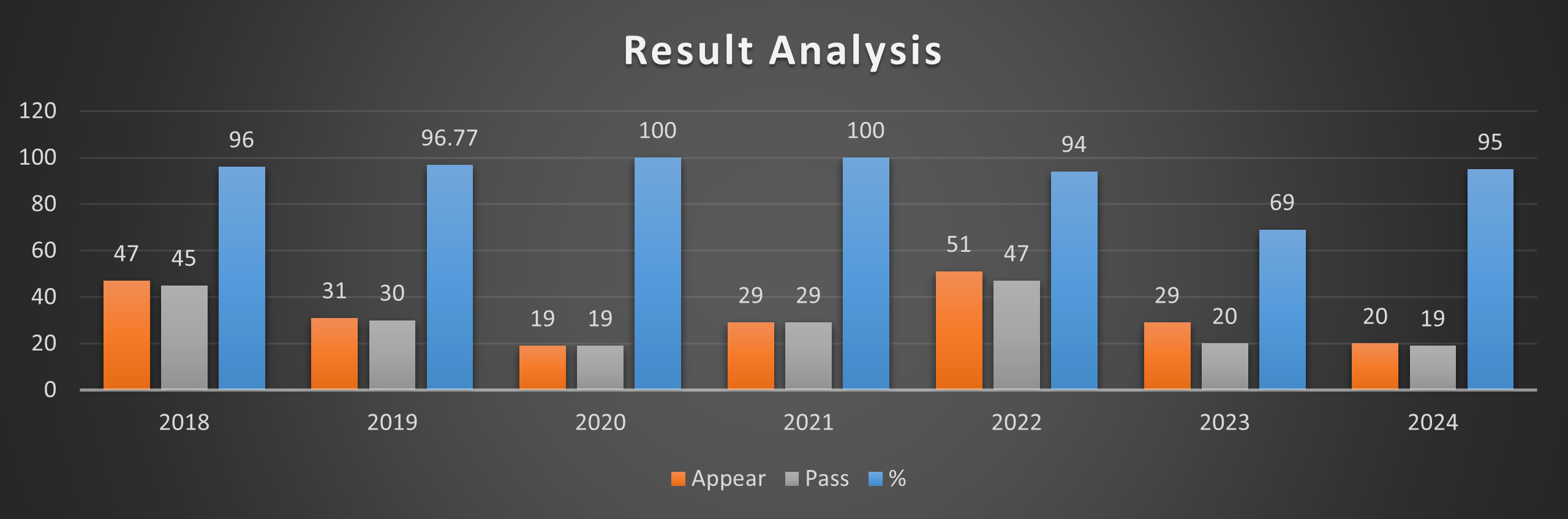
Result Analysis

Toppers (Last 5 Year)

Academic No. of Students Students Name % Percentage
2019-20 1 Kolhe Manjiri Ravindra 82.66%
2 Mule Jyoti Nagorao 82.66%
3 Mete Uma Prakashrao 80.66%
4 Ambore Mahadev Gangaram 80.66%
5 Munjal Omkar Lalji 80.66%
6 Shinde Priya Prakashrao 80.66%
2020-21 1 Rajpurohit Ravija Taulsingh 88%
2 Khandare Harsha Madhukar 86%
3 Landge Nandini Arun 83.33%
2021-22 1 Alaspure Aachal Rukmasa 75.33%
2 Bhalerao Minakshi Girjaji 74%
3 Adkine Maroti Sadashiv 70.66%
4 Qureshi Imran Sattar 70%
2022-23 1 Garud Hariom Rameshwar 72%
2 Kadam Smita Sakharam 76%
3 Suryawanshi Meena Narayan 68.66%
4 Kale Ganesh Omprakash 67.33%
5 Gaikwad Amruta Kiran 66.66%
6 Khare Sandhya Keshav 72.66%
7 Dagde Padmakar Rangnath 70.66%
2023-24 1 Vibhute Riya Devanand 74%
2 Khillare Shweta Dashrath 70.66%
3 Bochkari Aniket Purushottam 76.66%
4 Pawar Sapna Balaji 80.00%
5 Kadam Bhagwat Vishwanath 70.00%
6 Kadam Omkar Shivaji 70.66%
7 Gayakwad Omkar Kailash 74.66%
8 Ingole Vaibhav Shamrao 73.33%
9 Fegde Kailash Bhanudas 74.66%
10 Londhe Nikita Satish 78.66%
11 Adkine Shivani Ramchandra 76.66
Name of the Teacher: Dr. R. G. Kumawat
Class Semester Subject Link
BAFY Sem-I & II Sociology U-Tube-Link
BASY Sem-III & IV Sociology U-Tube-Link
BATY Sem-V & Sem VI Sociology U-Tube-Link
Name of the Teacher: Dr. Swati Patil
BAFY Sem-I & II Sociology U-Tube-Link
BASY Sem-III & IV Sociology U-Tube-Link
BATY Sem-V & Sem VI Sociology U-Tube-Link

A. Title:

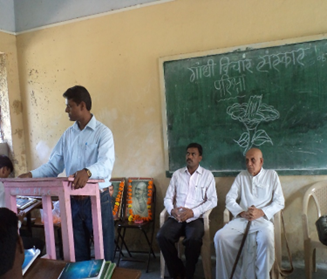
1. Organizing Gandhi Vichar Sanskar Pariksha in order to instill the moral values in the students.

B. Objectives:
1. Instill the moral values in the students.
2. Strengthening the social relationships.
3. To promote the value of non -violence.
4. To introduce the philosophy of Mahatma Gandhi to students in order to help them become good citizens in the future.

C. The Context:

Today, we can see a negative atmosphere of tension, war, and conflict among several countries across the world. Over the past ten years, many innocent people have lost their lives due to war and violence. We have witnessed several such tragic incidents. Events of this nature at the international level leave a deep impact on the younger generation. Many young people have come to strongly believe that violent actions are the only way to solve the problems in life. Even in a democratic country like India, we often witness political, religious, caste-based, and racial conflicts. Many times, such conflicts escalate into violent activities and bloodshed. We have seen numerous such incidents. To change this situation and to eliminate violence from the world, there is only one effective solution – to re-establish the great philosophy of Mahatma Gandhi, especially the value of non-violence. In order to introduce Mahatma Gandhi’s philosophy to the younger generation, to instill the value of non-violence in students, and to reduce incidents of war, tension, and bloodshed, the Department of Sociology has taken the initiative to spread Gandhian thought among college students through the Gandhi Vichar Sanskar Pariksha.

D. Evidence of Success:

Over the last 14 years the department of Sociology organizing Gandhi Vichar Sanskar Pariksha to spread the Gandhian thoughts and inculcate the importance of the value of Non-Violence in the students. Every year average 40 to 50 students shows the interest the to attend this exam. Several students of the college reached on the district level and achieved the Gold Medal along with certificate of appreciation. The Coordinator, Dr. R. G. Kumawat felicitated each year with the certificate of appreciation by the Gandhi Foundation. The Institution also honored with mementos by Gandhi Foundation. Gandhi Vichar Sanskar Pariksha conducted by an Institution, the name is “Gandhi Foundation”, Jalgaon, Maharashtra. This institution takes the initiatives to spread the Gandhian thoughts all over the world with arranging Gandhi Vichar Sanskar Pariksha.

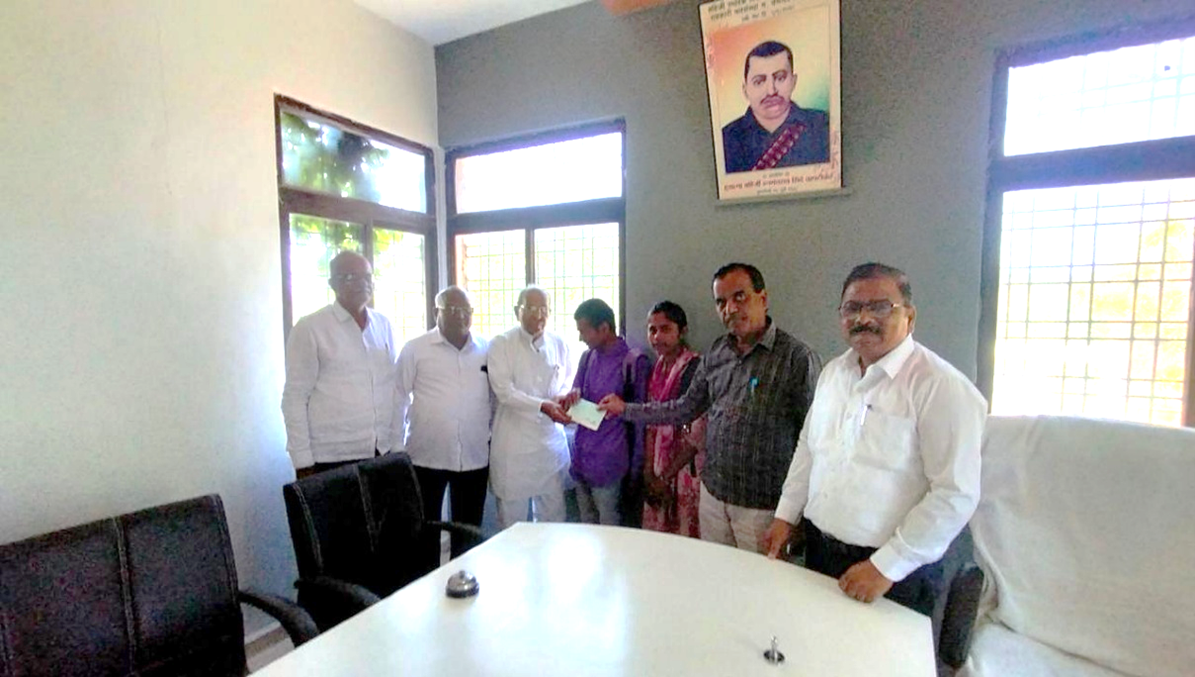
E. Photos (with Geotag)
Result Analysis
Result Analysis
Sr no Nature of Activity Organizing Agency / Collaboration Agency No. Of Student Participates Duration Link
1 Voters’ Awareness Programme Tahasil office Basmath 40 14 March 2022 Link
2 Inclusion of the name in voters list of eligible people Tahasil office Basmath. 50 06 to 13 Dec. 2022 Link
3 Participate in Nashamukt Abhiyan Maharashtra State Department of Social Justice and Special Assistance. 74 09 September 2023 Link
4 COTPA Act awareness programme. Tahasil office and office of the Taluka Health Officer 74 03 January 2025 Link
Sr no Name of the Alumni Year of Passing Progress
1 Ambhore Shital Baliram M A in sociology
2 Ambhore Sunita Shivaji M A in sociology
3 Bharti Chimutai Ramrao M A in sociology
4 Done Aayodhya Balaji M A in sociology
5 Magar Shital Bapuji M A in sociology
6 Kalyankar Satish Sambhaji M A in sociology
7 Chintewar Shilpa Bhimrao SET in Law
8 Chavan Chakradhar Dattatray Appointed as teacher
9 Adkine Maroti Sadashiv MSW
10 Datar Rohan Bajirao MSW
11 Pawar Vaibhav Narayan MSW
12 Kamble Rahul Uttamrao Mah. Police
13 Manish Pote PSI
Sr no Name of the Event YouTube Link / Webinar Link
1 August 2015, Wallpaper designed to commemorate Dr. APJ Abdul Kalam Link
2 January 2023, Voters Awareness Programme Link
3 January 2024, Voters Awareness Programme Link