Hu. Bahirji Smarak Vidyalaya Education Society, Wapti's

Bahirji Smarak Mahavidyalaya


Basmathnagar, Dist. Hingoli - 431 512 (MS)


Affiliated to Swami Ramanand Teerth Marathwada University, Nanded

âś… Recognized by UGC 2(f) and 12(B) Status  

|| 🏆 NAAC Reaccredited with 'A' Grade (CGPA 3.02)


Bahirji Smarak Mahavidyalay

1.Brief history

The Department of chemistry Bahirji Smarak Mahavidyalaya Basmatnagar ,District Hingoli , established in 1992-93. There was one professor and one lab attendant.Prof.M.B. Swami was head of the department.Prof.Ashok Santukrao Kulkarni joined in academic year 1994.and Prof.B.M.Dhoot in the year 1996 ,Prof. Shrikant Gawande appointed in the year 2011.Later,The Department is shifted to a new building with well equipped specious Laboratories. In keeping view as educational ambience to provide knowledge of science -technology & Higher education to the students of rural society.So,the Department has arranged higher educational facilities along with quality education & gender equity.The Department has started P.G. courses in the academic year 2019-20 and Research center in 2023-24. Now Prof.A.S.Kulkarni is working as Professor & Head of the Department.Many Students of the department working in the prominent position.Three students achieved post doctoral fellowship,one awarded gold medal in B.Sc.Chemistry in the SRTMU Nanded. Many students working in different social and professional field such as teachers, professors, govt jobs, & Business etc.

1. Features of the Department
  • Department have Three Permanent faculty.
  • MoUs & collabrations with other colleges.
  • Well equipped laboratories and research lab.
  • Department offers PG course.
  • Department conducts certificate courses.
  • Faculties are continuing engage in research activities.
  • Students participate in the Avishkar Research Festivals. Faculties provide necessary guidance. to them for making research projects.
2. Strength
  • Good no. of students.
  • Good result of the UG & PG classes.
  • Qualified & Experienced faculty.
  • Well equipped & Specious Laboratories
  • Good no. of reference books, textbooks & journals in the Library.
  • MoUs Signed with other colleges for transformation of knowledge.
3. Future Plan
  • To organize Intrnational seminar & conference, workshop.
  • To apply for major, minor projects
  • To provide industrial training counsultancy.
  • To organize on campus drive for UG & PG Students

Name of the Program Papers Taught POs and COs
B.Sc. (PDF link of all papers) Link the PDF doc of POs and COs

Note: Use the following templates to write the POs, PSOs, and Cos. and convert it into pdf.


At the end of the programme, students will be able to:
  1. Core competency in subject chemistry and in allied subject areas.
  2. Students are expected to have coherent understanding of fundamental principles, current trends as well as future opportunities in subject area.
  3. Knowledge of basic principles in instrumental techniques used laboratory.
  4. Capability to characterize, identify and separate components of unknown compounds using modern instrumental methods.
  5. Competency in critical thinking after identifying assumptions that frames our thinking and action, checking out their degree of accuracy, validity and finally our response from different perspectives.
  6. Skill to apply the role of chemistry in safe handling of chemicals, environmental issues, and other societal concerns.
  7. Awareness of different value systems including our own, understanding moral dimensions of our decisions and accept responsibility for them.
  8. The ability to engage in lifelong learning in the broadest context of socio-technological change.
  9. Ability to elicit views of others, mediate disagreements and come up with healthy conclusions in group discussion.

Class & Paper Course code & course title At the End of the Course
B.Sc I Paper - I SCHECT 1101
Organic & Inorganic Chemistry
  1. The basic things for chemical reactions i.e. Substrate and Reagents Types of reagents Electrophilic and Nucleophilic Homolytic and heterolytic fission. Electronic displacement effect. Aromatic, antiaromatic and nonaromatic for organic compounds.
  2. The different intermediates in chemical reactions and their uses in synthesis
  3. Appreciate the concept of grouping elements in accordance to their properties led to the development of Periodic Table.
  4. Understand the ideas related to periodic properties of elements such as atomic radii, ionization enthalpy, electron gain enthalpy, electronegativity.
B.Sc I Paper II SCHECP 1101
Laboratory Course Organic Chemistry & Inorganic Chemistry
  1. Identify type of titration and estimation of ions.
  2. Prepare required standard solution.
  3. Determine hardness of any water sample.
  4. Determine physical constant of solid/liquid.
B.Sc I GE SCHEGE 1101
Everyday Chemistry
  1. to understand the chemistry behind the product which we use in our day to day life
  2. enlightened about the pros and cons of using processed food.
  3. to create curiosity among the readers about chemicals.
B.Sc I SEC SCHESC 1101
Fundamentals of Chemistry Laboratory OR Water Pollution
  1. List the main water pollutants and their effects on human health and the environment.
  2. Discuss several types of water pollution problems and their chemical aspects affecting them.
  3. Interpret the results of laboratory analysis for water characterization.
  4. Develop a broad overview understanding of the strategies, regulations and policies to manage water pollution.
B.Sc II Paper III SCHECT 1201
Organic & Inorganic Chemistry
  1. Students are able to write and discuss the mechanism of reactions of carbonyl compounds.
  2. Students will learn the concept of reaction mechanism.
  3. Students can explain and discuss synthesis of carboxylic acids and their derivatives.
  4. Apply qualitative analysis techniques to identify basic and acidic radicals, accounting for interfering radicals and using solubility product and complex formation principles for group separation.
B.Sc II Paper IV SCHECT 1202
Physical & Inorganic Chemistry
  1. Explain key concepts of quantum theory, including Planck's quantum theory, photoelectric effect, and the Compton effect, highlighting their significance in the development of modern physics.
  2. Explain key concepts of quantum theory, including Planck's quantum theory, photoelectric effect, and the Compton effect, highlighting their significance in the development of modern physics.
  3. Interpret the Schrödinger wave equation and explain the physical significance of wave functions (Ψ and Ψ²) in describing atomic behavior.
  4. Understand and apply the laws of thermodynamics, including the first and second laws, and explain concepts like Carnot’s cycle, entropy, and thermodynamic efficiency.
B.Sc II Paper V SCHECP 1201
Laboratory Course Organic and Inorganic Chemistry
  1. Students can determine Rf values of organic compounds.
  2. Students learn about the fundamentals of organic qualitative analysis.
  3. Students are able to identify the functional groups present in organic compounds using appropriate reagents.
B.Sc II – Paper VI SCHECP 1202
Laboratory Course Physical and Inorganic Chemistry
  1. Students can able to calculate Normality & Strength of solution using Potentiometer & Conductivitymeter.
  2. Students can able to verify Lambert–Beer's Law.
  3. Students can able to determine energy of activation.
  4. Students can able to study the effect of solute on CST.
B.Sc II – Paper VII SCHEMT 1201
Physical & Inorganic Chemistry
  1. Explain the basic concepts of catalysts and catalysis, including different types (positive, negative, homogeneous, and heterogeneous) with appropriate examples.
  2. Describe the characteristics of catalytic reactions, autocatalysis, and enzyme catalysis, and distinguish between promoters and catalytic poisons with examples.
  3. Classify acids and bases as strong or weak and explain their behavior in aqueous solutions using dissociation constants and degree of dissociation.
  4. Apply Ostwald’s dilution law and the concept of ionic product of water to determine the behavior of weak electrolytes in solution.
  5. Calculate pH and pOH of strong and weak acids and bases, their mixtures, and buffer solutions; analyze the interrelationship between pH and pOH.
  6. Identify various water pollutants, their sources, and effects; perform basic water quality analysis including chloride, acidity, alkalinity, and hardness.
  7. Recognize types, causes, and impacts of soil pollution and carry out simple soil analyses including moisture content, pH, nitrogen, and lime estimation.
B.Sc II – Paper VIII SCHEMP 1201
Laboratory Course Chemistry (Minor)
  1. Students can find out the strength of acetic acid by titrating it against sodium hydroxide.
  2. Students can find out the strength of sodium carbonate solution by titrating it against hydrochloric acid.
  3. Students can determine moisture content and pH of different soil samples.
B.Sc II – Paper IX SCHEGE 1201
Generic Elective (GE)
  1. Explain the scope and importance of clinical chemistry in modern medical diagnostics.
  2. Describe enzyme structure, kinetics, and their diagnostic relevance through clinical assays.
  3. Analyze disorders related to carbohydrate metabolism such as diabetes and interpret related test results.
  4. Understand lipid metabolism and its implications in cardiovascular health, including interpreting lipid profile tests.
B.Sc II SCHEVC 1201
Chemistry in Daily Life
  1. Students will develop comprehensive products to meet new product criteria within the desired timelines.
  2. Students will identify food additives, adulterants, and contaminants in common food items.
  3. Students will acquire skills in the preparation of cosmeceuticals.
  4. Students will be enlightened about the theoretical and applied knowledge of perfumes, such as their classification, composition, and testing.
B.Sc III – Paper XII Organic & Inorganic Chemistry
  1. After completion of this course, students will be able to study organic reactions and mechanisms.
  2. After completion of this course, students will be able to recognize and comment on different synthetic drugs and dyes.
  3. Students will be able to discuss the uses and synthesis of some vitamins and pesticides.
B.Sc III – Paper XIII Physical & Inorganic Chemistry
  1. Students will understand the concepts of molecular spectroscopy and its applications.
  2. Students will know the theory and application of the distribution law.
  3. Students can illustrate the classification and application of metal carbonyls.
B.Sc III – Paper XVI Laboratory Course Organic and Inorganic Chemistry
  1. Students will know and understand the separation of organic binary mixtures under qualitative analysis.
  2. Students will know and understand the preparation of organic compounds.
  3. Students will understand the gravimetric estimation of metals and their salts.
B.Sc III – Paper XVII Laboratory Course Physical and Inorganic chemistry
  1. Students will study the effect of surfactants on the surface of water by using a stalagmometer.
  2. Students can determine the partition coefficient of iodine between water and CCL4.
  3. Students will know the separation and estimation of metal ion from a binary mixture.
B.Sc III – SEC Skill Enhancement Course
  1. Students will be able to know understand analytical and instrumental methods.
  2. Students will grasp the concept of errors, evaluation and statistics.
Sr No Photo Name of Faculty Designation Qualification Teaching Experience Biodata Link
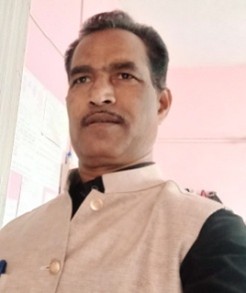
1 Dr. V. T. Narwade Dr. Ashok S. Kulkarni Professor & Head of Department M. Sc., B.Ed., Ph.D. 31 Years View Biodata
2 Dr. V. T. Narwade Dr. Mahesh B. Swami Professor & Vice-Principal M. Sc., Ph.D. 32 Years View Biodata
3 Dr. V. T. Narwade Dr. Shrikant S. Gawande Associate Professor M.Sc., B.Ed., Ph.D. 14 Years View Biodata
4 Dr. V. T. Narwade Mr. Vikesh V. Narwade Associate Professor(CHB) (M.Sc., SET) 1 Years View Biodata
5 Dr. V. T. Narwade Mrs. Smita G. Dugane Associate Professor(CHB) M.Sc., B.Ed.,SET 3 Years View Biodata
6 Dr. V. T. Narwade Mr. Sachin M. Ghatol Associate Professor(CHB) M.Sc., B.Ed., SET.,NET 2 Years View Biodata
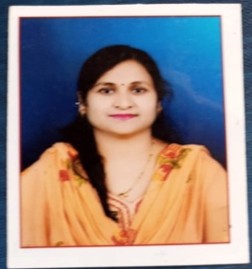
7 Dr. V. T. Narwade Mrs. Rachana B. Naik Associate Professor(CHB) M.Sc.,SET., View Biodata

Research Contributions

Research Center Details (if applicable)

A. Year Of Introduction :2023-24

B. Highlight of the center : Department has started research center in the academic year 2023-24

C. Area of research : Synthesis of Heterocycles & Metal complexes

D. Research Guide :Dr.Mahesh B Swami

E. Collaboration : N.S.B College,Nanded


4.1 Research Guide:

SR.NO Name of the Guide Year of Recognition
1 Prof. Dr. Mahesh B. Swami 2008


4.2 Ph.D. Scholars Registered:

SR.NO Name of the Guide Name of the Scholars Title of Research Degree Awarded
1 Prof. Dr. Mahesh B. Swami 02 -- Nil


4.3 Research Projects:

,
SR.NO Name of the Faculty Tittle of the Project Funding Agency Amount Sanctioned Year of Award
1 Prof. Dr. Mahesh B. Swami Synthesis of schiff’s bases and thiazolidinoneUGC(47-040/07 WRO) 80,000/- 2008-10
2 Dr. Shrikant S. Gawande Synthesis and study of some novel coumarin scaffolds as the future multipotent drug candidates UGC(42-245/2013 SR) 12,50,800/- 2013-16


4.4 Research Papers Published:

SR. No. Name of the Faculty No. of Research Papers View Details (Link)
1 Dr. A. S. Kulkarni 14 View
2 Dr. M. B. Swami 26 View
3 Dr. S. S. Gawande 19 View

4.4 Book / Chapter in Book Published:

Name of the Faculty: Dr. A.S.Kulkarni
SR. No. Title of the Book / Chapters Published Year of Publication ISBN / ISSN No. Publisher Details View Details (Link)
1 A Text Book of Physical Chemistry 1998 18-87043-22-1998 Nirmal Publication, Nanded
ISBN No. 18-87043-22- 1998
View
2 A Text Book of Practical Physical Chemistry 2020 9788194020684 (Dec-2020) Siddhi Publication (National) ISBN-9788194020684 DEC-2020 View

Name of the Faculty: Dr. M.B.Swami
SR. No. Title of the Book / Chapters Published Year of Publication ISBN / ISSN No. Publisher Details View Details (Link)
1 Text Book of Organic Chemistry for B.Sc. F.Y 28 Oct 2008 - Nikita Publication, Latur View
2 Text Book of Organic Chemistry for B.Sc. S.Y 17 Sept 2014 978-93-83389-82-7 Aruna Publication, Latur View
3 Practical Chemistry for B.Sc. I, II, III Year 05 Sept 2015 978-93-5240-000-3 Aruna Publication, Latur View
4 Text Book of Organic Chemistry for B.Sc. T.Y Jan 2018 978-93-5240-160-4 Aruna Publication, Latur View
5 E-book Text Book of Organic Chemistry for B. Sc. S.Y [Sem.-III & IV] Jun 2021 978-81-945948-4-0 (E-book) Prabhakar Publication, Latur View
6 Name Reactions Molecular Rearrangement & Reagents Jun 2021 978-81-952089-20 Prabhakar Publication, Latur View

Name of the Faculty: Dr. Shrikant S. Gawande
SR. No. Title of the Book / Chapters Published Year of Publication ISBN / ISSN No. Publisher Details View Details (Link)
1 Selected Topics in Inorganic Chemistry 2019 978-81-921155-5-9 Prathmesh Prakashan View


4.5 Patents / Copy rights Published / Field:

SR.NO. Name of the Faculty Tittle of Patent / Copyrights Date of Filing Year of Certificate Award View Details (Link)
1


4.6 Seminar / Conferences / Workshop / Webinar Organized:

SR.NO. Name of the event Sate / National Duration View Details (Link)
1 Workshop on “Scope of syllabus for B.Sc II & III Year in chemistry” 18/09/2010 University One day
2 National Conference on “Recent advances in bioactive heterocycles (RABH)” 22/03/2012 National One day
3 Online National Conference on “Recent advances in chemical and physical sciences” 14/12/2022 National One day
4 Workshop on “Instrument Handaling and Reparing” 09/10/2024 College One day
5 National Webinar on “Intellectual Property Rights & Drugs development” 11/03/2025 National One day


4.7 Workshop on IPR and Research Methodology:

SR.NO. Title of the Conference Sate / National / International Duration No. of Participants
1 College Level One Day 15


Academic Year: 2021-22
1. Tittle:

“Certificate course on “Trichoderma Cultivation”
2. Course Outcomes:

after completion of this Research method course student know The basic information of research to prepare a well hypothesis.
  • They know detailed information about steps of research.
  • They Understand different methods of sampling.
  • They know scope & importance of research methodology.
3. Syllabus:Research Methodology

UNIT 1 Introduction of Research Methodology
1.1
Meaning of research, Objectives of research, Types of research,
1.2
Research approaches, Significance of research, Research methods versus methodology, Research and scientific methods,
1.3
Research processes, Criteria for good research
1.4
Research problem, Selecting the problem, Necessity of defining the problem, Techniques involved in defining a problem


UNIT 2 Research Design and Sample Surveys
2.1
Meaning and need for research design, features of a good design.
2.2
Important concepts relating to research design: Dependent and independent variables, Extraneous variables, Control, Research hypothesis, Experimental and non-experimental hypothesis – Testing research, Experimental and control group
2.3
Different research designs: Research design in case of exploratory research studies, Research design in case of hypothesis- testing research studies, basic principles of experimental designs, Important Experimental Designs
2.4
Sampling Design, steps in sample design, criteria of selecting a sampling procedure, characteristics of a good sample design, different types of sample design


4. Report:

The Department of Chemistry organized a Certificate Course on Research Methodology from 01/02/2022 to 04/03/2022. A total of 26 undergraduate students participated in this course. Mr. Vishnu Sawant served as the Course Coordinator.

The department successfully completed the entire syllabus through 30 lectures. The course enhanced students' knowledge and research skills. After completing the course, students learned:

  • Conceptual and methodological issues essential for conducting research.
  • Philosophy of science, measurement methods, hypothesis formulation and testing, scientific communication, and research ethics.
  • Step-by-step design and implementation of quantitative and qualitative techniques, including case studies.
  • Introduction to educational research methodologies, both qualitative and quantitative.
  • Understanding of the historical development of research methodologies.

This course motivated students to take interest in innovative research and to write research articles.

The course concluded on 04/03/2022. Based on a 50-mark evaluation, certificates were awarded to the participants in a felicitation ceremony.


Academic Year: 2022-23
1. Tittle:

“Certificate Course on Research Methodology”
2. Course Outcomes:
after completion of this Research method course student know
  • Basic understanding of research required to prepare a well-structured hypothesis.
  • Detailed knowledge of the various steps involved in the research process.
  • Understanding of different methods of sampling.
  • Knowledge of the scope and importance of research methodology.
3. Syllabus:
Research Methodology
UNIT 1: Introduction to Research Methodology
  • 1.1
    Meaning of research, Objectives of research, Types of research
  • 1.2
    Research approaches, Significance of research, Research methods versus methodology, Research and scientific methods
  • 1.3
    Research processes, Criteria for good research
  • 1.4
    Research problem, Selecting the problem, Necessity of defining the problem, Techniques involved in defining a problem
UNIT 2: Research Design and Sample Surveys 2.1
Meaning and need for research design, Features of a good design
2.2
Concepts related to research design: Dependent & independent variables, Extraneous variables, Control, Research hypothesis, Experimental and non-experimental hypothesis, Testing hypothesis, Experimental & control group
2.3
Different research designs: Exploratory research design, Hypothesis-testing research design, Basic principles of experimental designs, Important experimental designs
2.4
Sampling design, Steps in sample design, Criteria for selecting sampling procedure, Characteristics of good sample design, Types of sample designs
4. Report:

The Department of Chemistry organized a Certificate Course on Research Methodology from 05/02/2023 to 03/03/2023. A total of 32 undergraduate students participated in this course. Mrs. Prerana Ambhore served as the Course Coordinator.

The department completed the entire syllabus through 30 lectures. The course enhanced students' knowledge and research skills. After completing the course, students learned:

  • The key conceptual and methodological issues involved in successful research.
  • Philosophy of science, measurement methods, hypothesis formulation and testing, scientific communication, and ethical issues in research.
  • A step-by-step approach to designing and implementing quantitative and qualitative techniques, including case studies.
  • Introduction to qualitative and quantitative research methodologies in education.
  • Understanding the historical development of research methodology.

The course encouraged students to take interest in innovative research and motivated them to write research articles.

The course concluded on 03/03/2023. Based on a 50-mark evaluation, certificates were awarded to the successful participants during a felicitation ceremony.


Academic Year: 2023-24
1. Tittle:
“Certificate Course in General Awareness and Basic Techniques in Chemical Laboratory”
Course Outcomes:

  • Laboratory safety: Learnt essential safety measures required while working in the chemical laboratory.
  • Handling equipment: Developed the ability to correctly handle various apparatus, glassware, and instruments used in laboratory work.
  • Solution preparation:Acquired fundamental knowledge and practical skills for preparing different types of chemical solutions.
2. Syllabus:

Part 1: General Awareness
  • Safety measures while working in the chemical laboratory.
Part 2: Introduction to Apparatus, Glasswares and Instruments
  • Detailed information about different apparatus, glasswares, and instruments.
  • Uses and handling of common laboratory instruments.
Part 3: Basic Concepts

A) Weighing of organic compounds and calibration of apparatus & glasswares

B) Preparation of Standard Solutions

  • Introduction: Solute, Solvent, Solution, Types of solutions, Homogeneous & Heterogeneous solutions.
  • Concentration of solutions: Dilute solution & Standard solution.
  • Ways of expressing concentration: Percentage by mass (% w/w), Percentage by volume (% v/v), Mole fraction (X), Molarity (M), Molality (m), Normality (N), Parts per million (ppm), Parts per thousand (ppt).
  • Numericals based on solution concentration.
  • Preparation of any standard solution from stock solution.

C) Standardization of Solutions

  • Standardization of KMnOâ‚„ solution
  • Standardization of NaOH solution
  • Standardization of HCl solution
  • Standardization of EDTA solution
  • Standardization of Kâ‚‚Crâ‚‚O₇ solution

D) Purification of Organic Compounds

  • Crystallization
  • Distillation
  • Sublimation
  • Melting Point
  • Boiling Point
Objectives: Aim of the Laboratory Course
  • To create awareness among students regarding proper behaviour and safety in a chemical laboratory.
  • To gain detailed information about different apparatus, glasswares and instruments used in the laboratory.
  • To understand the basics of preparation and standardization of chemical solutions.
  • To learn simple methods of purification of organic compounds.
4. Report:

The Department of Chemistry organized the Certificate Course in General Awareness and Basic Techniques in Chemical Laboratory during the period 01/09/2023 to 03/10/2023. A total of 29 students participated in this course. Mr. S. M. Ghatol and Mrs. S. G. Dugane served as the course coordinators.

The department successfully completed the entire syllabus through 30 lectures. During this course, students acquired essential knowledge and practical skills. After completion of the course, the students learned the following:

  • Safety measures while working in a chemical laboratory.
  • Detailed information about various apparatus, glasswares, and laboratory instruments.
  • Basic knowledge of preparing Normal, Molar, and other types of solutions, enabling independent preparation.
  • Understanding of simple purification methods of organic compounds.

The course concluded on 03/10/2023, and based on a 50-mark evaluation, certificates were awarded to the students with felicitation.


Academic Year: 2024-25
1. Title:

“Certificate Course in General Awareness and Basic Techniques in Chemical Laboratory”
2. Course Outcomes :
1.The students who completed this certificated course successfully they know how to behave and safety measures while working in chemical laboratory.
2.They all know detailed about different apparatus, glass-wares and instruments in chemical laboratory.
3.They all have got basic knowledge behind the preparation of solutions and even them able to prepare solution at its own.
4.They understand different simple methods of purification of organic compounds.
3. Syllabus:

Part 1: General Awareness
  • Safety measures while working in a chemical laboratory.
Part 2: Introduction to Apparatus, Glasswares and Instruments
  • Detailed information about different apparatus, glasswares, and instruments used in laboratories.
  • Understanding the uses of various laboratory instruments.
Part 3: Basic Concepts

A) Weighing of organic compounds and calibration of apparatus & glasswares

B) Preparation of Standard Solutions

  • Introduction: Solute, Solvent, Solution, Types of solutions, Homogeneous and Heterogeneous solutions.
  • Concentration of solutions: Dilute solution and Standard solution.
  • Ways of expressing concentration: % w/w, % v/v, Mole Fraction (X), Molarity (M), Molality (m), Normality (N), ppm, ppt.
  • Numericals based on concentration.
  • Preparation of standard solutions from stock solutions.

C) Standardization of Solutions

  • Standardization of KMnO4 solution
  • Standardization of NaOH solution
  • Standardization of HCl solution
  • Standardization of EDTA solution
  • Standardization of K2Cr2O7 solution

D) Purification of Organic Compounds

  • Crystallization
  • Distillation
  • Sublimation
  • Melting Point
  • Boiling Point
Objectives: Aim of the Laboratory Course
  • To create awareness among students on how to behave in a chemical laboratory.
  • To gain detailed information about different apparatus, glasswares, and instruments.
  • To understand the basics of preparation and standardization of solutions.
  • To learn simple methods of purification of organic compounds.
4. Report:

The Department of Chemistry organized the Certificate Course in General Awareness and Basic Techniques in Chemical Laboratory from 15/01/2025 to 18/02/2025. A total of 35 undergraduate students participated in this course. Mrs. S. G. Dugane and Mr. V. V. Narwade served as the course coordinators.

The department successfully completed the entire syllabus in 30 lectures. During this course, students gained essential knowledge and laboratory skills. After completion of the course, the students learned the following:

  • Safety measures while working in a chemical laboratory.
  • Detailed information about different apparatus, glasswares, and laboratory instruments.
  • Basic knowledge of preparing Normal, Molar, and other types of solutions.
  • Understanding of simple purification methods of organic compounds.

The course concluded on 18/02/2025. Based on a 50-mark examination, certificates were awarded to the students with due felicitation.


Linkage and collaborations / MoUs
Sr no Photo The Organization that signed the Mous Year of Collaboration Duration Aim of Collaboration Activities organized under MoUs
1 Shiv Chattrapati College, Aurangabad 2021-2026 5 Years To exchange information on research & educational programme 1. National Webinar on “Intellectual Property Rights & Drugs development” 11/03/2025

2. State level Science Exhibition 11/02/2023
2 Sarwadnya Kayadhu Krishna Herbal Cosmetics Ltd.,Vasmatnagar 2023-2025 3 Years To Run On Job Training programme Conducted OJT Programme for M.Sc I year Students

B.Sc III & M.Sc II Chemistry
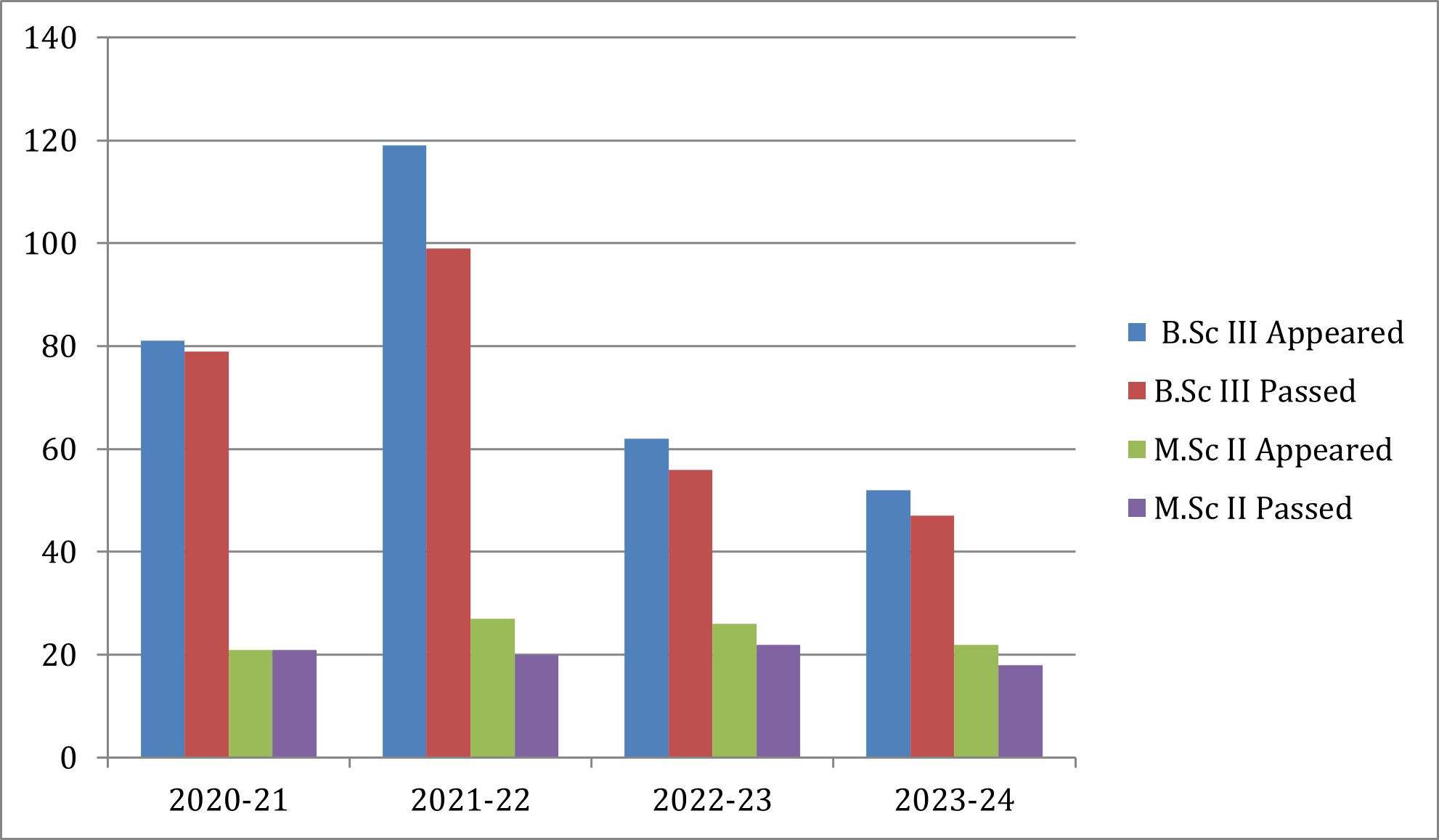
Result Analysis


Toppers (Last 5 Year)
Academic Year No. of Students Student Name Percentage
2021-22 1 Patil Shivkanta S. 81.33%
2 Bhosale Nikita V. 80.33%
3 Deshmukh Kanchan K. 75.33%
4 Pathan Shireen B. 74.00%
2023-24 1 Narwade Vijaya Vilas 77.74%
2 Dakhore Ankita Dilip 75.71%
3 Khandare Kiran Milind 75.03%
4 Magar Rani Keshav 74.89%
5 Jadhav Pooja Premaji 74.66%
6 Pole Akanksha Laxman 74.14%
M.Sc Chemistry
2020-21 1 Farooqui Sana 76.75%
2 Kadri Sayyada Firdos 75.87%
3 Tumbe Vaishnavi 75.87%
4 Bobade Krishna 74.62%
2021-22 1 Shaikh R.S.S. 77.37%
2 Pawar P.D. 68.12%
3 Mete N.B. 65.05%
2022-231Narwade Vikram Vilas69.69%
2023-24 1 Sayyada B.T.S. 82.34%
2 Pawar V.N. 76.84%
3 Deshmukh K.K. 64.12%
2024-25 1 Nasrin Shaikh Ibrahim 73.54%
2 Tazeen Fatema A. Khan 73.20%
Bahirji Smarak Mahavidyalaya, Basmath
Department of Chemistry
E – Content
Class & Semester Unit Name Subject Contents Covered Video Links
B.Sc FY
Sem-I
Surface Chemistry Chemistry The concept of Adsorption and absorption with suitable examples.

Freundlich adsorption isotherms.
Video 1

Video 2
B.Sc II
Sem-III
Phase equilibrium / Atomic structure & wave mechanics Chemistry Williard Gibb's Phase rule equation & terms – Phase, Components, Variables.

Planck's quantum theory of radiation (Max Planck's law).
Video 1

Video 2
B.Sc III
Sem-V
Electrochemistry / Distribution Law Chemistry Nernst Theory of Single electrode potential.

Nernst Distribution law & its limitations.

Dissociation and Association of solute in one of the solvents.

Kinetics of decomposition of HI.

Photochemical kinetics of dimerization of Anthracene.

Photochemical reaction kinetics of HCl formation.
Video 1

Video 2

Video 3

Video 4

Video 5

Video 6
M.Sc I Surface Chemistry Chemistry Micelles Video
A. Title:

ANALYSIS OF DRINKING WATER OF THE COLLEGE CAMPUS

B. Objectives:
  1. To determine the percentage of chlorine.
  2. To determine the percentage of fluorine.
  3. To determine the pH of water.
  4. To determine the hardness of water.
  5. To determine the TDS of water.
C. The Context:

Today’s great and dangerous problem is contaminated non-potable water. Although water covers 75% of the total area of the earth, potable water is only 1% and used as drinking water.

Today, water non-potability is the most important question in front of us. Thus, as students of chemistry belonging to rural areas, it is our duty to explain how the analysis of water is done by simple methods. For this project, drinking water analysis is carried out in a simple manner.

D. Evidence of Success:

As students of chemistry, it is our duty to express the knowledge of how drinking water (potable water) is analyzed by simple methods.

We present these simple methods in this best practice and suggest whether water is potable or non-potable.

SR. No. Nature of Activity Organizing Agency / Collaboration Agency No. of Students Participated Duration Link
1 National Webinar Shiv Chattrapati College, Aurangabad 101 One day
2 On Job Training for PG Sarwadnya Kayadhu Krishna Herbal Cosmetics Ltd., Vasmatnagar 30 Fifteen Days
SR. No. Name of the Alumni Year of Passing Progress
1 Shaikh Nasrin Ibrahim 2025 M.Sc in Chemistry
2 Tazeen Fatema Amjadulla Khan 2025 M.Sc in Chemistry
3 Farooqui Sana 2021 M.Sc in Chemistry
4 Kadri Sayyada Firdos 2021 M.Sc in Chemistry
5 Tumbe Vaishnavi 2021 M.Sc in Chemistry
6 Bobade Krishna 2021 M.Sc in Chemistry
7 Shaikh R.S.S. 2022 M.Sc in Chemistry
8 Pawar P.D. 2022
9 Mete N.B. 2022
10 Nadre Gajanan Gangadhar 2022 CSIR NET JRF Qualified
11 Mittal Ashok Bhalerao 2015 Assistant Superintendent, Central Silk Board, New Delhi
12 Manohar Limbaji Putale Section Officer, Nanded
13 Dr. Mahesh Neralkar Brandies University, Waltham, U.S.A.
14 Dr. Balaji D. Barve Ph.D Qualified
Post Doctoral Researcher, Taiwan, China
15 Santosh Raut CSIR NET/SET/Ph.D Qualified
Assistant Professor, Yeshwant Mahavidyalaya, Nanded
16 Dr. Dipak Katore Associate Professor
Nagnanth College Aundha
17 Dr. Pandhare Swati Laxmikantrao 2005 CSIR NET / Ph.D Qualified
Post Doctoral NLC Pune
18 Mutkale Sandeshrao 2009 M.Phil in Chemistry
19 Dongarkadekar Pradeepkumar V. 2000 Assistant Teacher Jr. College
20 Kattekar Priya S. 2010 Assistant Professor
Yeshwant College Nanded
M.Sc Physical Chemistry
21 Nadre Sachin 2015 Teacher
M.Sc Chemistry
22 Ghodke Manik L. 1999 Teacher
23 Harbayshi Ankita R. M.Sc Chemistry
24 Shinde Jyoti B. 1998 Assistant Teacher Jr. College
25 Farukhi Mobashi Roddins Research Student
Moulana Azad College Aurangabad
26 Narwade Pradyna Assistant Teacher Jr. College
27 Narwade Rewati Principal, Cambridge Vidyalaya Nanded
28 Deshpande Mahesh Associate Scientist, R&D Department, Lupin Ltd Pune
29 Pawar Omprakash Assistant Professor, Govt. Rajaram College
30 Gudup S.S. M.Sc Ph.D Research Fellow, Kashmir
31 Dalvi G.G. M.Sc Ph.D Chemist, Dubai
32 Lalpotu S.S. Research Associate, Sai Life Science Ltd Pune
33 Pachmase R.R. Dy. Manager, R&D Astec Life Sciences Ltd, Dombiwali, Thane
34 Boralkar M.M. Branch Manager, Bank Of India, Pandharpur
35 Chatankar Abhijit Assistant Manager, MGB, Sambhajinagar
36 Korde Shrikant Clerk at Treasury Office, Washim
37 Gundale S.N. Jr. Lecturer at B.S. College Basmath
38 Nakkalwar Hanuman Jr. Lecturer At A.C.S College A. Balapur
39 Pande Dipak Sarswati Institute Parbhani
40 Satpute Dnaneshwer Jr. Lecturer Modern College, Basmath
SR. No. Name of the Event YouTube Link / Webinar Link
1
2
3