Basmathnagar, Dist. Hingoli - 431 512 (MS)
Affiliated to Swami Ramanand Teerth Marathwada University, Nanded
✅ Recognized by UGC 2(f) and 12(B) Status
|| 🏆 NAAC Reaccredited with 'A' Grade (CGPA 3.02)
The college was established in 1971 and started the streams of Arts and Commerce, and then a new Science Branch was started in the academic year 1992-93. It mainly has the Department of Botany, initially Mr. V. S. Maske was appointed as the Head of the Department and in the academic year 1994-95 Mr. Vilas Tulshiram Narwade joined as a full-time Professor. Both of them were making great contributions to the development of the department.
In the college, the postgraduate degree education M.Sc. was started for the first year in the academic year 2022-23. The department provides information and guidance to the students about research in botany, guest lectures, IPR and research projects. It also organizes lectures by various experts.
Prof. Dr. V. S. Maske retired on 31/05/2024 and then on 01/06/2024 the charge of the post of Head of the Department was handed over to Prof. Dr. V. T. Narwade, since then he has been working as the Head of the Department till date.
The faculty of the department has played an important role in the wall poster competition, youth festivals, annual gatherings etc. organized for the students. The faculty of the department is participating in national conferences, workshops and research work.
The department not only imparts Botany education to the students but also provides hands-on training in various activities organized by the department including floriculture, soilless farming, importance of medicinal plants, cultivation and care of plants etc. Students are always encouraged to participate in these and participate in various cultural competitions, wall posters, seminars and competitive examinations. This is enhancing the knowledge of the students, their skills, their leadership and research etc. Many alumni of the department are playing roles in the society as government servants, teachers, researchers and professors.
| Name of the Program | Papers Taught | POs, PSOs, and Cos, |
| B. Sc. F. Y. | View | Link |
| B. Sc. S. Y. | View | |
| B. Sc. T. Y. | View | |
| M. Sc. F. Y. | View | Link |
| M. Sc. S. Y. | View | |
| Sr No | Photo | Name of Faculty | Designation | Qualification | Teaching Experience | Biodata Link |
|---|---|---|---|---|---|---|
| 1 | ![]() |
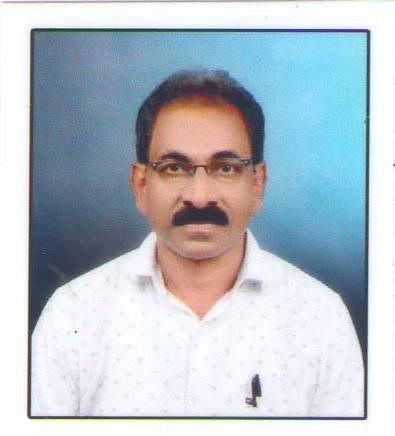
Dr. V. T. Narwade | Professor | M. Sc., B.Ed., SET, Ph.D. | 30 Years | View Biodata |
| SR.NO | Name of the Guide | Year of Recognition |
| 1 | Dr. V. T. Narwade | Recognition as a ‘Research Supervisor’ on dated 30-07-2011, S. R. T. M. U. Nanded |
| SR.NO | Name of the Guide | Name of the Scholars | Title of Research | Degree Awarded |
| 1 | -- | -- | -- | -- |
| SR.NO | Name of the Faculty | No. of Research Papers | Book /Chapter in Book Published: |
| 1 | Dr. V. T. Narwade | 31 | 02 |
| SR.NO | Name of the event | Sate / National | Duration | View Details (Link) |
| 1 | Online National Webinar on IPR & Drug development | National Level | 11-03-2025 | Link |
| SR.NO | Title of the Conference | Sate / National / International | Duration | No. of Participants |
| 1 | Workshop on IPR | College Level | 30-09-2023 | 22 |
| 2 | Seminar on Importance and implications of IPR in the field of Botany | College Level | 08-02-2025 | 32 |
| 3 | Online National Webinar on IPR & Drug development | National Level | 11-03-2025 | 89 |
| 4 | Workshop on Research methodology | College Level | 07-01-2022 | 40 |
| 5 | Seminar on Research methodology | College Level | 13-08-2022 | 32 |
| 6 | Seminar on Research methodology | College Level | 27-09-2023 | 41 |
| 7 | Seminar on Research methodology “Field project” | College Level | 17-03-2025 | 30 |
| Academic Year: 2020-21 | |
|---|---|
| 1. Tittle: Certificate course in“Trichoderma Cultivation” |
|
| 2. Course Outcomes: 1. To understand students Trichoderma species as a bio-fertilizer. 2. By getting technical skills through the course students will able to establish and manage agriculture. 3. This course will enable the students to prepare bio-fertilizers. 4. Trichoderma promotes plant growth by improving nutrients acquisition. 5. Trichoderma species are bio-fertilizers use for farming. 6. It systematic acquired resistance effective against bio-tropic and necrotrophic pathogens. 7. Trichoderma producing antimicrobial compounds that kill pathogenic fungi and outcompeting pathogenic fungi for space and nutrients. 8. Trichoderma production will improve that socio-economic status and solve the employment problems of rural economy by generating the income and job opportunities. |
|
| 3. Syllabus: Unit I: Trichoderma cultivation Introduction, systematic position, structure, action- mode, cultivation details. Unit II: Bio-control Introduction, definition, agents, concept of bio-control factors affecting; Plant based products (Trichod, Neem- Cake). Unit III: Practicals on Trichoderma cultivation Principle, requirement, procedure, observations, harvesting, results and record, visit to Trichoderma Lab. |
|
| 4. Report: A certificate course in “Trichoderma cultivation” was organized by the Department of Botany in the first semester of each academic year from 2020-2021 to 2024-2025. This course was completed within thirty days as per the schedule. The course was starting in the month of September
and ended in the month of October. This course was conducted under the guidance of Dr. Dr. V. S. Maske, Dr. V. T. Narwade and Mr. V. A. Pawade of the Department of Botany.
In this course, the students were given information about how to be aware of biofertilizers. The course included the scope, benefits, biocontrol and cultivation process of Trichoderma. The faculty had conducted unit tests and course examination for the students on this course. |
|
| Academic Year: 2021-22 | |
|---|---|
| 1. Tittle: Certificate course in“Mushroom cultivation”. |
|
| 2. Course Outcomes: 1. Mushroom production will improve the socio-economic status and solve the employment problems of rural economy by generating the income and job opportunities. 2. To understand mushroom types edible and non-edible mushroom production. 3. To learning cultivation of different edible mushroom. 4. Acquaintance with climatic requirement of mushroom cultivation. 5. To form building knowledge on diseases and pests of mushroom and their management. 6. To learn intellectual skills with this type of learning, the learner will understand concepts, rules and procedures. 7. The learner uses personal strategies to think, organize learn and behave. 8. To learn verbal information, motor skills and attitude. |
|
| 3. Syllabus: Unit I: Fungal Biomass Introduction, scope, need, edible and poisonous fungi, important genera of non-convential food, advantages and disadvantages. Unit II:Cultivation of Mushroom Introduction, systematic position, structure of Pleurotus thallus and its fruiting body, species of Pleurotus (P. ostreatus / flabbelatus / ulmaricus), cultivation methods of Pleurotus. Commercial cultivation, advantages and disadvantages. Unit III: Practicals on Mushroom Principle, requirements, procedure, observation, picking and packing, results, visit to a mushroom cultivation laboratory. |
|
| 4. Report: A certificate course in “Mushroom cultivation” was organized by the Department of Botany in the second semester of each academic year from 2020-2021 to 2024-2025. This course was completed within thirty days as per the schedule. The course was starting in the month of January and ended in the month of February. This course was conducted under the guidance of Dr. Dr. V. S. Maske, Dr. V. T. Narwade and Mrs. M. B. Salmote of the Department of Botany. In this course, the students were given information about being aware of edible and non-edible mushroom. The course included the scope, important genera of non convential food, economic importance and cultivation process of mushroom cultivation. The faculty conducted two-unit tests of 10 marks each and 15 marks of course examination for the students on the same course. After the completion of the course examination, the students were distributed a course certificate. Thus, the certificate course was conducted. |
|
| Academic Year: 2022-23 | |
|---|---|
| 1. Tittle: Certificate course: Hydroponics Techniques: “Growing Without Soil” Course The goal of this course is to provide a broad understanding of hydroponic techniques while also encouraging participants to develop practical skills that they can apply to their own gardening or business ventures. |
|
| Course Outcomes: At the end of the course, participants will learn or will 1. Understand various hydroponic techniques and select the right system for their needs. 2. Gain knowledge on how to set up and properly maintain a functional hydroponic system. 3. Understand how to manage nutrient solutions and effectively monitor plant health. 4. Identify the economic viability and sustainability of hydroponic farming. |
|
| 2. Syllabus: *Duration: Seven weeks (weekly classes) Week 1: Introduction to Hydroponics. 1. Overview of Hydroponics: History and Benefits. 2. Comparison of Hydroponics with Traditional Soil-Based Farming. 3. Basic Principles of Plant Growth and Nutrition. Week 2: Explaining Hydroponics Systems 1. Different Types of Hydroponics Systems (e.g., Nutrient Film Technique, Deep Water Culture, Aeroponics, and Drip Systems). 2. Advantages and Disadvantages of Each System. 3. Choosing the Right System Based on Your Space and Crop Selection. Week 3: Setting Up Your Hydroponics System 1. Step-by-Step Guide to Assembling a Basic Hydroponics System. 2. Choosing Containers, Growing Media, and Equipment (Pumps, Lights, etc.). 3. Understanding Water Quality and pH Levels. Week 4: Nutrient Management 1. Importance of Nutrients in Hydroponics. 2. How to prepare and mix nutrient solutions. 3. Monitoring and adjusting nutrients for plant growth. Week 5: Plant selection and care 1. Selecting suitable crops for hydroponic systems (leafy greens, herbs, fruits). 2. Propagation techniques: seeds, etc. 3. Pest management and disease prevention in a hydroponic environment. Week 6: Environmental control and automation 1. Understanding the role of light, temperature, humidity, and air circulation. 2. Introduction to automated systems for monitoring and maintaining the environment. 3. Creating a sustainable indoor or outdoor hydroponic garden. Week 7: Economic viability and business aspects 1. Market trends in hydroponics and local food sources. 2. Basics of planning, marketing, and selling hydroponic products. 3. Exploring opportunities for small-scale or commercial hydroponic farming. Week 8: Final Project and Certificate 1. Participants will present their hydroponic projects. 2. Peer and instructor feedback session. 3. Award of a certificate of completion. |
|
| Academic Year: 2023-24 | |
|---|---|
|
2. Title: Certificate course: “Making Natural Mosquito Repellent Candles” This course structured approach will not only provide hands-on experience, but will also equip participants with valuable skills, whether for personal enjoyment or entrepreneurial endeavors. Course Outcomes At the end of the course, participants will learn to: 1. Create their own mosquito repellent candles using natural ingredients. 2. Understand the properties of various essential oils and their applications. 3. Market their candles effectively by understanding the basics of branding and sales. 4. Gain a hands-on understanding of safe candle making methods. |
|
|
2. Syllabus: Course Duration: Six weeks (weekly classes) Week 1: Introduction to Candle Making 1. Overview of the candle making process. 2. Materials needed: Cilantro leaves, Custard apple leaves, Neem leaves, resin, cow or buffalo dung, container (mold) 3. Safety practices and workspace setup. Week 2: Understanding Essential Oils and Their Benefits 1. Introduction to essential oils: what they are and how they work. 2. Specific oils known to repel mosquitoes (e.g. citronella, eucalyptus, lavender). 3. How to effectively select and blend essential oils. Week 3: Candle Making Process 1. A step-by-step guide to making basic candles. 2. How to incorporate essential oils into the candle making process. 3. Experimenting with different scents and blends. Week 4: Customizing Your Candles 1. Techniques for adding color and texture. 2. Creating unique styles (e.g., layered candles, decorative containers). 3. Troubleshooting common candle-making problems. Week 5: Packaging and Branding Your Candles 1. The importance of packaging for home products. 2. Designing labels and branding for your candles. 3. Tips for marketing and selling your product online or in local markets. Week 6: Final Project and Certificate 1. Participants will present their own mosquito repellent candles. 2. Feedback session. 3. Awarding a certificate of completion. |
| Sr no Photo | The Organization that signed the Mous | Year of Collaboration | Duration | Aim of Collaboration | Activities organized under MoUs |
|---|---|---|---|---|---|
| 1 |
| Academic | No. of Students | Students Name | % Percentage |
|---|---|---|---|
| 2020-21 | 1 | Chavan Rushikesh Avinash | 87.66% |
| 2 | Rakhonde Aditi Pralhadrao | 85.00% | |
| 3 | Narwade Vikram Vilas | 82.66% | |
| 2021-22 | 1 | Patil Shivkanta Shivaji | 91.66%% |
| 2 | Shaikh Jaweriya Tauqeer | 89.66% | |
| 3 | Shaikh Nasrin Ibrahim | 89.66% | |
| 2022-23 | 1 | Chavan Mohini Milind | 81.33% |
| 2 | Tazeen Fatema A. K. | 75.66% | |
| 3 | Kale Rutuja Sadashiv | 74.00% | |
| 2023-24 | 1 | Narwade Vijaya Vilas | 87.33% |
| 2 | Khandare Kiran Milind | 85.66% | |
| 3 | Kadam Gayatri Gopalrao | 85.00% | |
| 2024-25 | 1 | Bhalerao Shivpuja Baswaraj | 88.00% |
| 2 | Bharti Pratima Kishanrao | 84.66% | |
| 3 | Dalvi Gauri Vinayak | 83.00% |
| Academic | No. of Students | Students Name | % Percentage |
|---|---|---|---|
| 2023-24 | 1 | Shaikh Jaweriya Tauqeer | 77.44% |
| 2 | Narwade Santosh Laxman | 72.00% | |
| 3 | Jaiswal Seema Shitallal | 68.16% | |
| 2024-25 | 1 | Godhawale Vidyasagar Sureshrao | 69.23% |
| 2 | Farheen Naaz Md. Jameel | 68.68% | |
| 3 | Swami Ankita Maharudra | 68.23% |
| Name of the Teacher: Dr. V. T. Narwade | ||||||
|---|---|---|---|---|---|---|
| Class | Semester | Subject | Link | |||
| B.Sc.FY | Sem-I & II | Botany | U-Tube-Link | |||
| B.Sc.SY | Sem-III & IV | Botany | U-Tube-Link | |||
| B.Sc.TY | Sem-V & Sem VI | Botany | U-Tube-Link | |||
1. Floriculture (Technique)
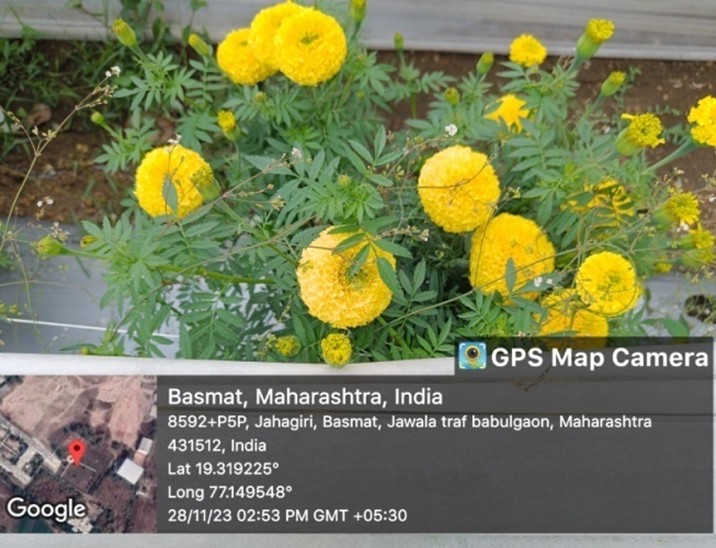
Floriculture is a branch of horticulture that specifically focuses on the cultivation and management of flowers and ornamental plants. It involves the production, marketing and arrangement of flowers for decorative purposes, such as floral displays, landscaping, and cut flower arrangements. The aim of floriculture is to cultivate and manage flowers and ornamental plants, and the objectives revolve around producing high-quality flowers, meeting market demand, maximizing profitability, promoting research and innovation, adopting sustainable practices, providing training and education, and encouraging collaboration and networking within the industry. Floriculture also offers numerous benefits to farmers. It provides economic opportunities, diversifies agricultural practices, offers higher profit margins, and creates employment. Additionally, it contributes to foreign exchange earnings, promotes environmental sustainability and allows farmers to tap into a wide range of market channels. By embracing floriculture, farmers can enhance their income, expand their agricultural activities, and contribute to the beauty and aesthetics of their surroundings.
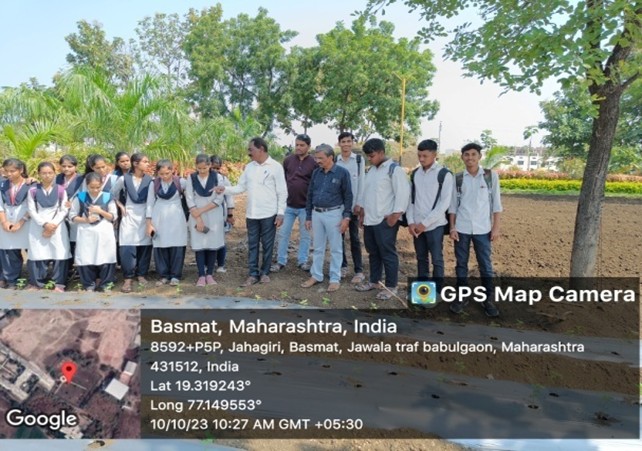
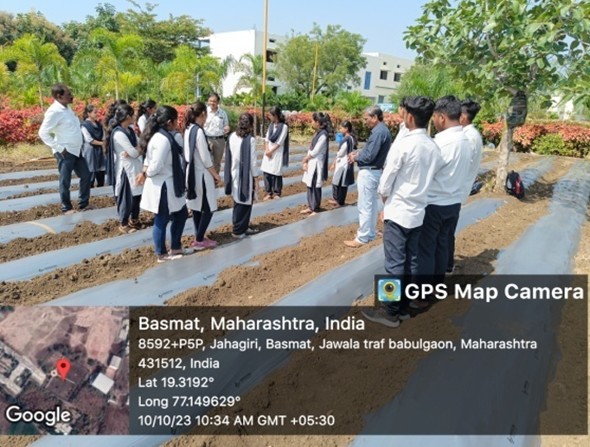
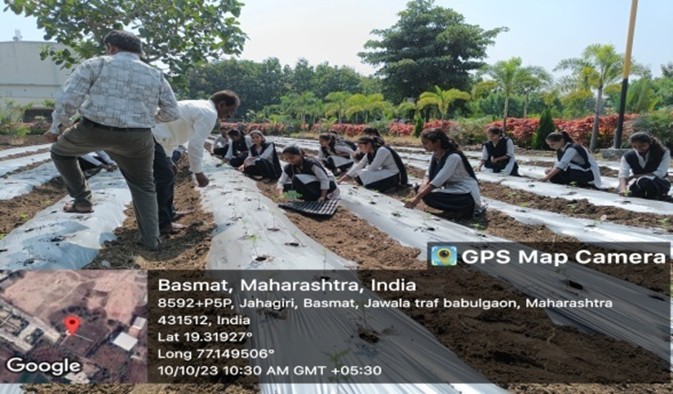
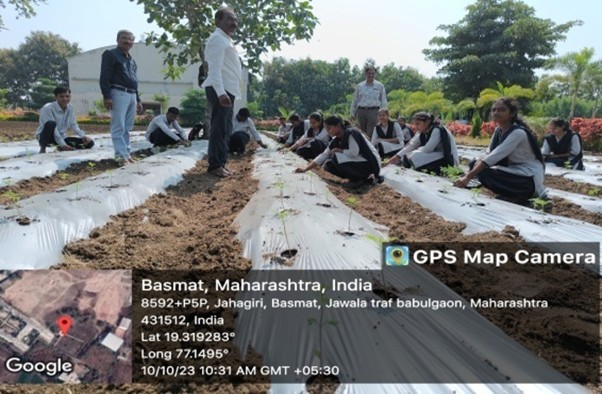
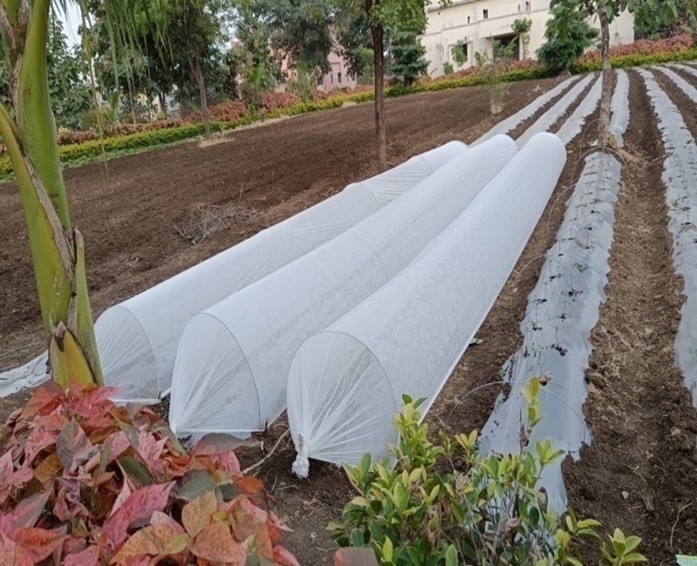
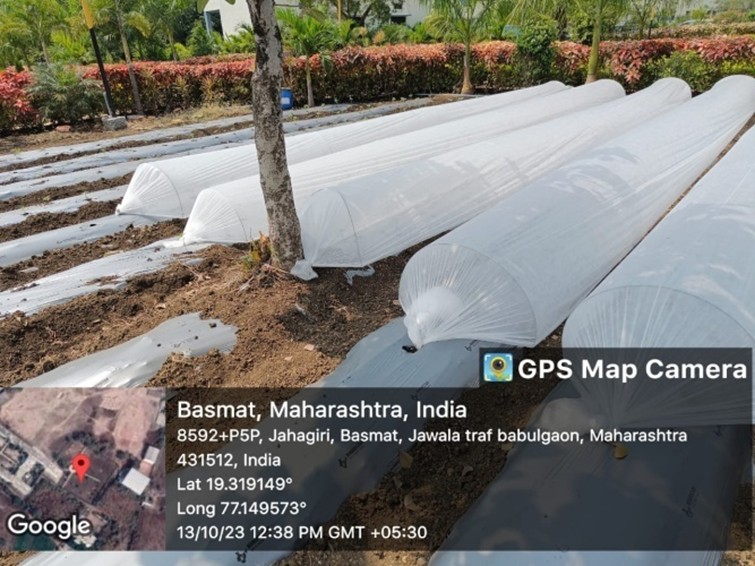
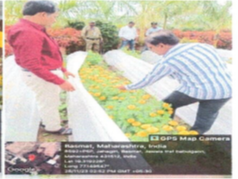
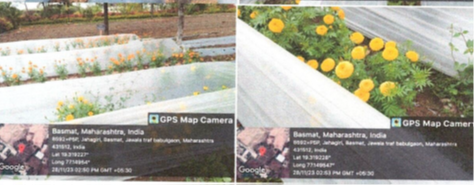
The Department of Botany, Bahirji Smarak Mahavidyalaya, Basmathnagar, organized a best practice as ‘Floriculture’ workshop. The aim of floriculture is providing students with hands-on experience and knowledge in the science of flower cultivation and arrangement. The workshop held in the month of September and October of each year (Last Five Year) for B. Sc. and M. Sc. students to learn about the world of floriculture and its importance in horticulture and aesthetics. The workshop began with an interactive session by Dr. V. T. Narwade in which he introduced floriculture, gave an overview of floriculture, and highlighted its importance in the agricultural industry, economy and cultural practices. Speaking on planting and propagation techniques, he introduced the students to various methods of plant propagation including seeds, cutting and division. Dr S. S. Gawande demonstrated how flower seeds are planted through the students. Flower Design and Arrangement, students learned the principles of floral design, color combination and techniques to create aesthetically pleasing arrangements. Students were taught proper care methods for various types of flowers including timely watering, fertilizing and pest management strategies. Students were given practical demonstrations on practical floriculture practices and planning by Dr. V. T. Narwade and Dr. S. S. Gawande. Students were also shown how to use mulching methods and crop-covers. The workshop is conducted in the college’s Botanical Garden through practical exercises. This enabled the students to experience new skills. Finally, the workshop concluded successfully.
| Sr no | Nature of Activity | Organizing Agency / Collaboration Agency | No. Of Student Participates | Duration | Link |
|---|---|---|---|---|---|
| 1 | Vermicomposting | Department of Botany, B. S. Mahavidyalaya, Basmathnagar | 18+8+24 = 50 | 10 Oct, 2023 | |
| 2 | Azolla cultivation | Department of Botany, B. S. Mahavidyalaya, Basmathnagar | 21+14 = 35 | 11 Oct, 2023 | |
| 3 | Hydroponic technique | Department of Botany, B. S. Mahavidyalaya, Basmathnagar | 13+26 =39 | 21 Oct, 2023 | |
| 4 | Terrace farming | Department of Botany, B. S. Mahavidyalaya, Basmathnagar | 15+23= 38 | 23 Oct, 2023 | |
| 5 | Environment Day celebration | Maharashtra State Department | 52 | 05 June, |
| Sr no | Name of the Alumni | Year of Passing (UG/ PG) | Progress |
|---|---|---|---|
| 1 | Bhalerao Mittal Ashok | 2018 UG | Assistant Superintendent |
| 2 | Chavan Mohini Milind | 2023 UG | M. Sc. in Botany |
| 3 | Godawale Vidyasagar S. | 2023 UG | M. Sc. in Botany |
| 4 | Korde Shital Mahadev | 2023 UG | M. Sc. in Botany |
| 5 | Sontakke Durga Gopinath | 2023 UG | M. Sc. in Botany |
| 6 | Jaiswal Akash Ramlal | 2024 PG | CHB Assistant Professor |
| 7 | Shaikh Jaweriya Tauqeer | 2024 PG | CHB Assistant Professor |
| 8 | Bhosle Sharyu Prakash | 2024 PG | Jr. College Teacher |
| 9 | Pathan Jaweriya Suber | 2024 PG | M. Sc. in Botany |
| 10 | Farooqui Saima Nuzhat M. A. | 2024PG | M. Sc. in Botany |
| 11 | Narwade Vijaya Vilas | 2024 UG | M. Sc. in Botany |
| 12 | Khandare Kiran Milind | 2024 UG | M. Sc. in Botany |
| 13 | Kadam Gayatri Gopalrao | 2024 UG | M. Sc. in Botany |
| 14 | Bagal Nikita C. | 2024 UG | M. Sc. in Botany |
| 15 | Dakhore Ankita D. | 2024 UG | M. Sc. in Botany |
| 16 | Korde Munjaji N. | 2024 UG | M. Sc. in Botany |
| 17 | Pole Akanksha Laxman | 2024 UG | M. Sc. in Botany |
| 18 | Tompe V. A. | 2024 UG | M. Sc. in Botany |
| 19 | Jadhav Pooja P. | 2024 UG | M. Sc. in Botany |
| 20 | Lendale P. K. | 2024 UG | M. Sc. in Botany |
| Sr no | Name of the Event | YouTube Link / Webinar Link |
|---|---|---|
| 1 | Online National Webinar on IPR & Drug development | Link |